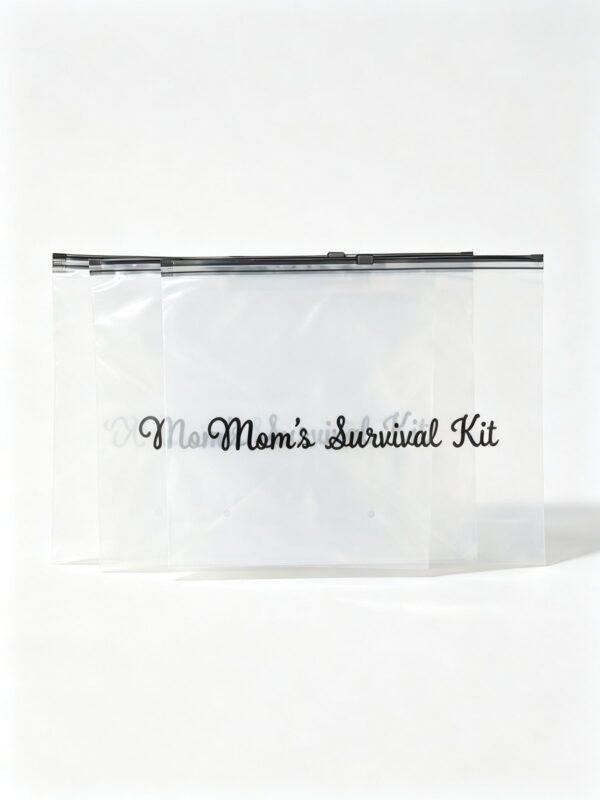
Flexible packaging pouches come in eight main formats: three-side seal, stand-up zipper, flat-bottom (8-side seal), quad-seal, center-seal gusset, spout, shaped, and printed roll film for automatic machines. The right choice depends on what you pack, how you fill it, how it is displayed, and whether the consumer needs to reclose it. This guide explains each format so you can shortlist two or three before asking for a quote.
How to compare flexible packaging pouches
Before looking at formats, write down four things about your product.
- The product: powder, granules, liquid or solid pieces? Greasy, sharp, fragile, or sensitive to light and oxygen?
- The filling method: hand filling, a semi-automatic filler, a premade-pouch machine, or a form-fill-seal line that runs roll film?
- The display: standing on a shelf, hanging on a peg, lying in a carton, or shipped direct to the consumer?
- The use: opened once and finished, or opened and reclosed many times?
Format and material are separate decisions. Almost every format below can be made from a basic PET/PE laminate, a metallized or pure-foil structure, or a kraft paper laminate. The format decides shape and function; the laminate decides barrier and look.
The main pouch formats
Three-side seal pouch
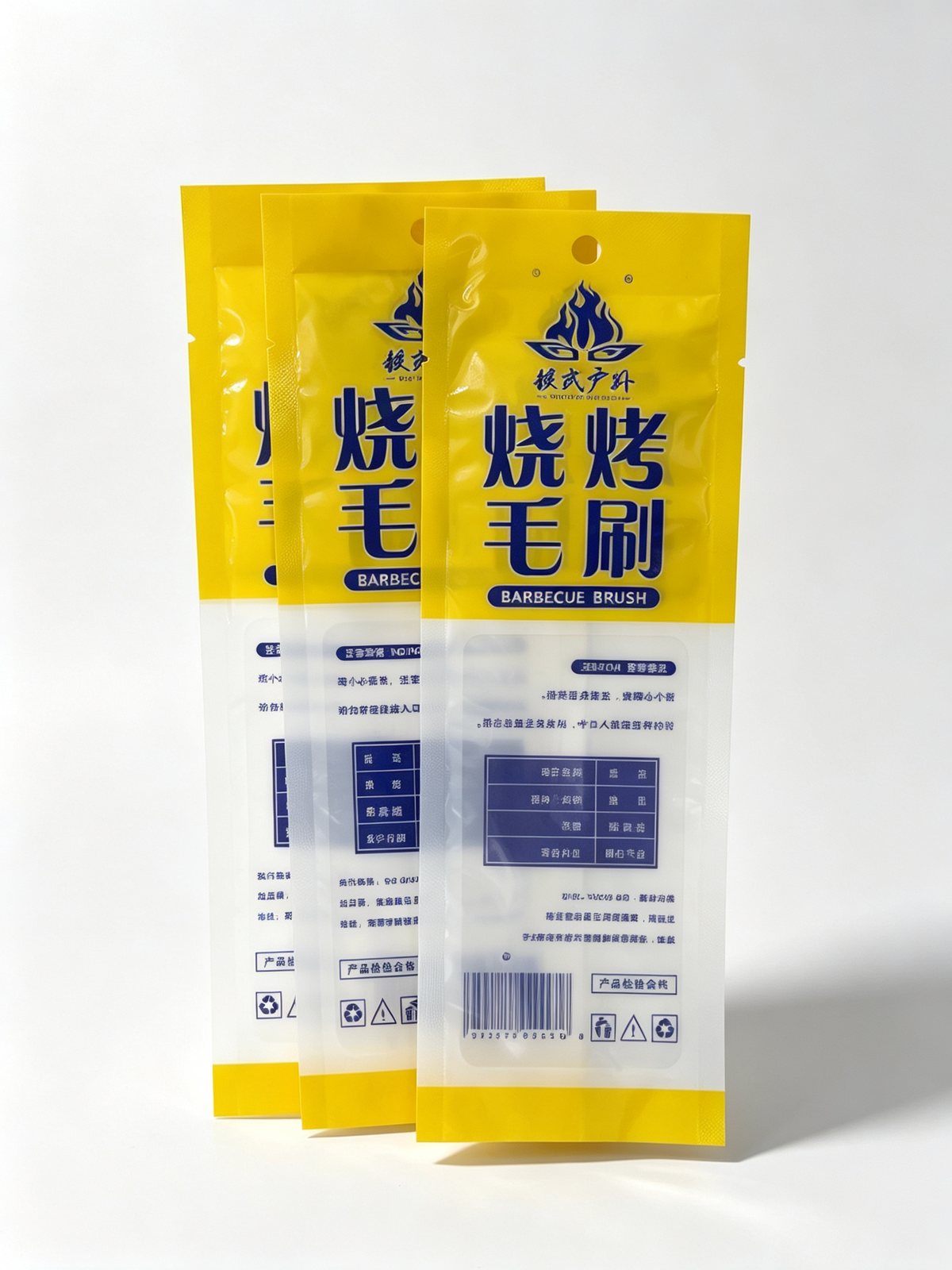
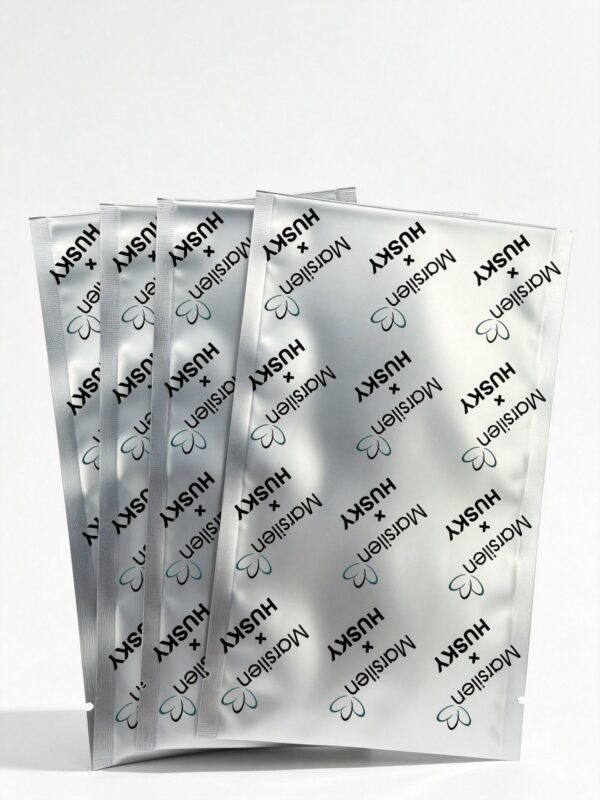
A flat pouch sealed on three sides and filled through the fourth. It is the simplest format, uses the least film, and is usually the most economical premade bag. It suits sachets, samples, facial masks, snacks and vacuum-packed foods. A tear notch, hang hole or zipper can be added. It does not stand up, so it is displayed on a peg or inside a carton.
Stand-up zipper pouch
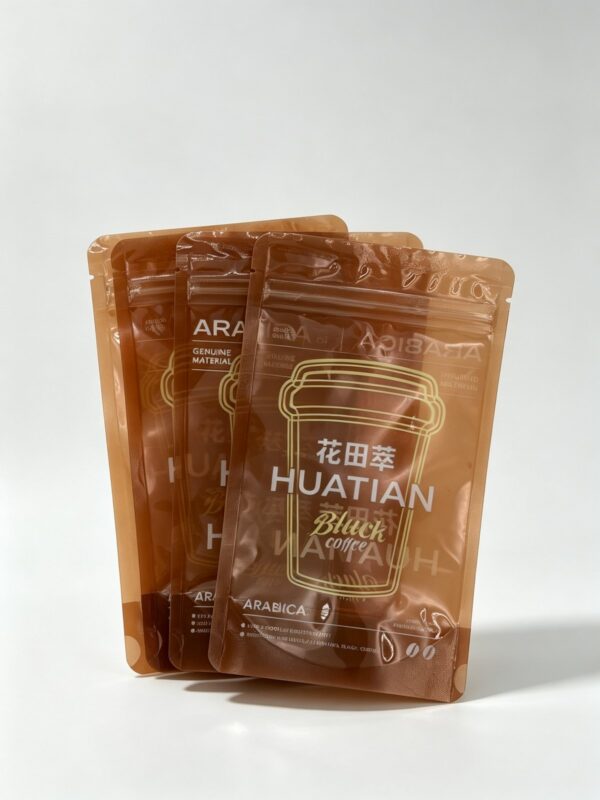
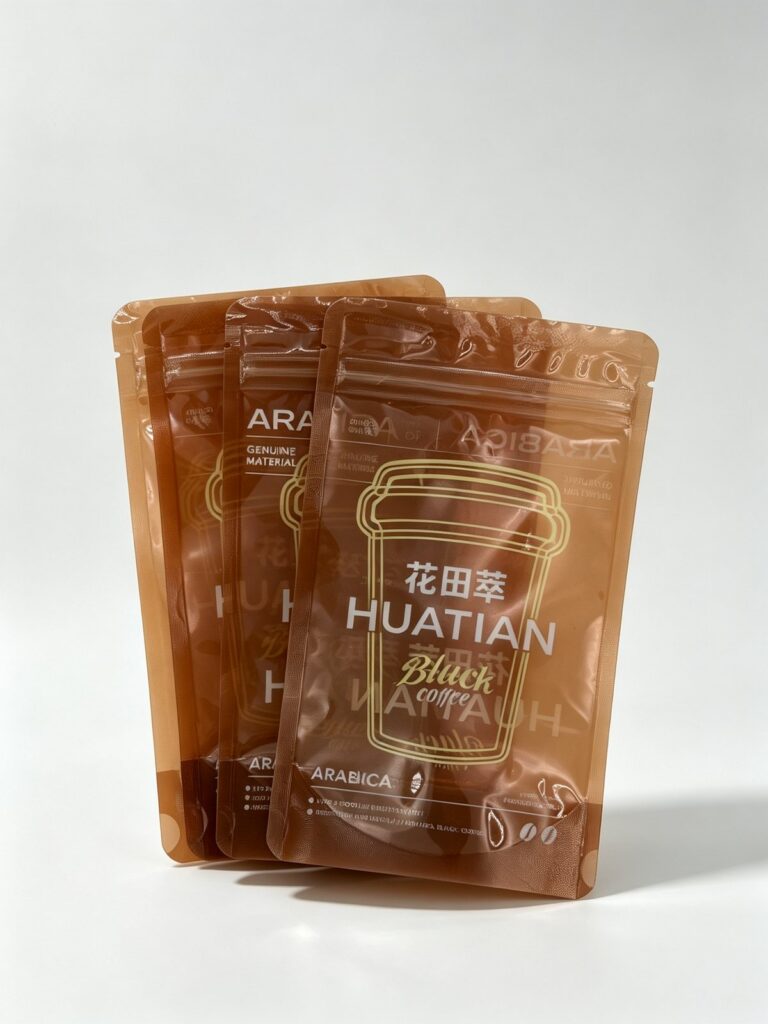
A bottom gusset opens when the pouch is filled, so the bag stands on its own and shows a wide front panel to the shopper. With a zipper it is the general-purpose choice for snacks, nuts, dried fruit, tea, powders and pet treats. Stand-up zipper pouches cost less than box-style bags and run on most premade-pouch fillers. They can lean or slump as they empty, and the capacity is limited by the size of the bottom gusset.
Flat-bottom pouch (8-side seal)
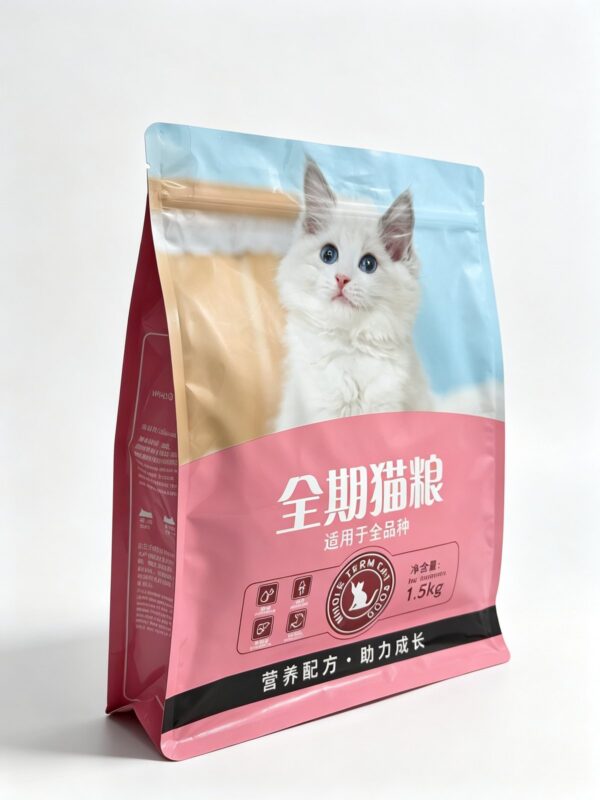
A flat base plus two side gussets gives a box-like bag with five printable panels: front, back, two sides and the bottom. Flat-bottom pouches stand very steadily, hold more product for the same shelf footprint, and look premium. They need more film and a more complex bag-making process, so the unit cost is higher. Typical uses are coffee, pet food, granola, rice and other premium dry foods.
Quad-seal bag
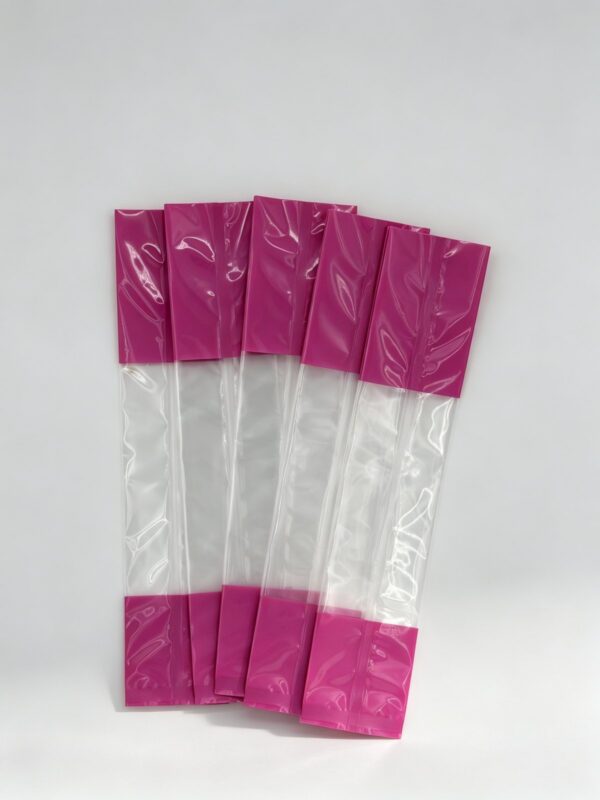
Two side gussets and four sealed vertical corners give the bag stiff edges that hold a pillar shape when filled. The quad-seal is a classic for coffee beans and heavier dry goods. It is usually closed with a heat seal and often fitted with a one-way valve or a tin-tie. A good example is the quad-seal foil bag used for roasted coffee.
Center-seal gusset pouch
The film is wrapped into a tube and sealed down the back, with or without side gussets, then sealed across the top and bottom. This is the familiar pillow or gusseted bag used for biscuits, bread, tea and high-volume snacks. The front panel has no seam, material use is efficient, and the format runs fast on automatic equipment. It rarely has a reclose feature.
Spout pouch
A stand-up pouch with a molded spout and screw cap, made for liquids and semi-liquids: juice, sauces, purees, jelly drinks, and refills for detergent or liquid soap. Spout pouches are lighter than rigid bottles and ship flat before filling. Because a liquid-filled pouch has to survive drops, the laminate is usually tougher, often with a nylon layer.
Shaped (die-cut) pouch
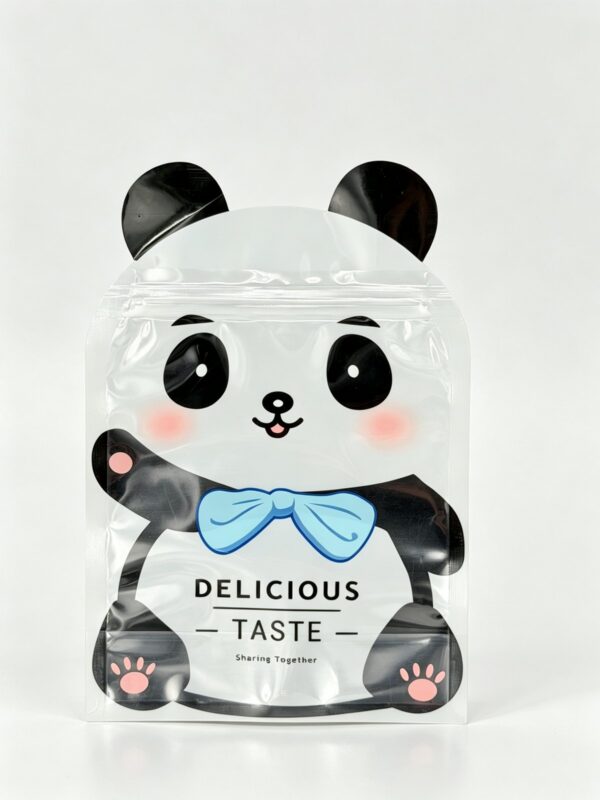
The outline is cut to a custom contour, such as a bottle, a fruit or a cartoon character. Shaped pouches stand out for children’s products, candy, promotions and sample packs. They need a custom cutting die and generate more trim waste, so expect a higher unit cost than a rectangular pouch of the same size.
Printed roll film
Roll film is not a bag. It is printed, laminated film supplied on a core, and your form-fill-seal machine forms, fills and seals the packs in one pass. For high volumes, printed roll film gives the lowest cost per pack. To quote it, the supplier needs your machine details: film width, core diameter, winding direction and eye-mark position.
Pouch format comparison table
| Format | Stands on shelf | Reclose options | Relative unit cost | Typical products |
|---|---|---|---|---|
| Three-side seal | No | Zipper optional | Low | Sachets, masks, samples, vacuum-packed foods |
| Stand-up zipper | Yes | Zipper standard | Moderate | Snacks, nuts, tea, powders, pet treats |
| Flat-bottom (8-side seal) | Yes, very stable | Zipper, pocket zipper or tin-tie | Higher | Coffee, pet food, premium dry foods |
| Quad-seal | Yes, when filled | Tin-tie or heat seal | Moderate to higher | Coffee beans, heavier dry goods |
| Center-seal gusset | Limited | Usually none | Low | Biscuits, bread, tea, high-volume snacks |
| Spout pouch | Yes | Screw cap | Higher | Liquids, purees, household refills |
| Shaped pouch | Depends on the design | Zipper optional | Higher | Children’s products, candy, promotions |
| Roll film | Depends on the pack formed | Rarely | Lowest per pack at volume | Any product packed on automatic lines |
Cost positions are relative; the actual price depends on size, laminate, print colors and quantity.
Features you can add to most formats
- Zipper: press-to-close by default; slider and pocket zippers for larger or premium bags.
- Tear notch: a clean opening above the zipper; the top seal doubles as tamper evidence.
- Clear window: shows the real product, at the cost of some light and oxygen barrier in that area.
- One-way degassing valve: for freshly roasted coffee and other products that release gas.
- Surface finish: gloss, matte, metallized, holographic or kraft paper looks.
Where Ruixiong Packaging fits in
Ruixiong Packaging makes all of the formats above at its Dongguan factory, with rotogravure printing in 1 to 10 colors, laminating and bag-making done in-house. The team that prints the film also converts it into bags, so it can tell you early whether a design detail will work on a gusset fold or a contoured seal. See the workflow on our factory page.
FAQ
Which pouch format is the cheapest?
For premade bags, a three-side seal pouch is usually the most economical because it uses the least film and the simplest bag-making process. For automated high-volume packing, roll film is normally lower still per pack. Always compare quotes on the same specification.
Can I use the same artwork on two different formats?
Not directly. Each format has its own dieline with different panel sizes, seal areas and fold positions, and gravure cylinders are engraved to that layout. Decide the format and size before cylinder making, and approve a digital or physical proof first.
Do I have to place a large order to try a new format?
No. Ruixiong handles both volume orders and small-batch sampling, so you can test filling, sealing and shelf display with real product before committing to a full run. Cylinders are stored after the first order, which speeds up reorders.
Not sure which format suits your product? Send us the product type, fill weight and filling method, and we will suggest a format and laminate with a quote. Contact Ruixiong Packaging to start.