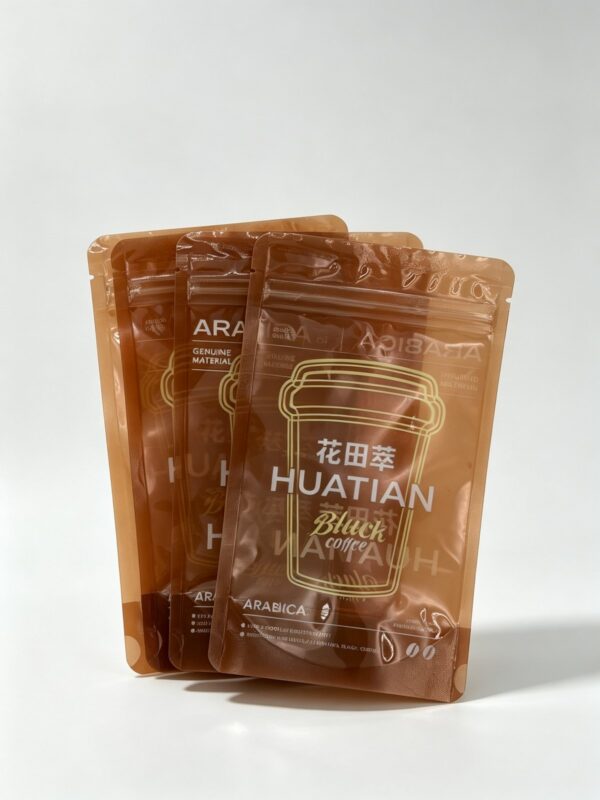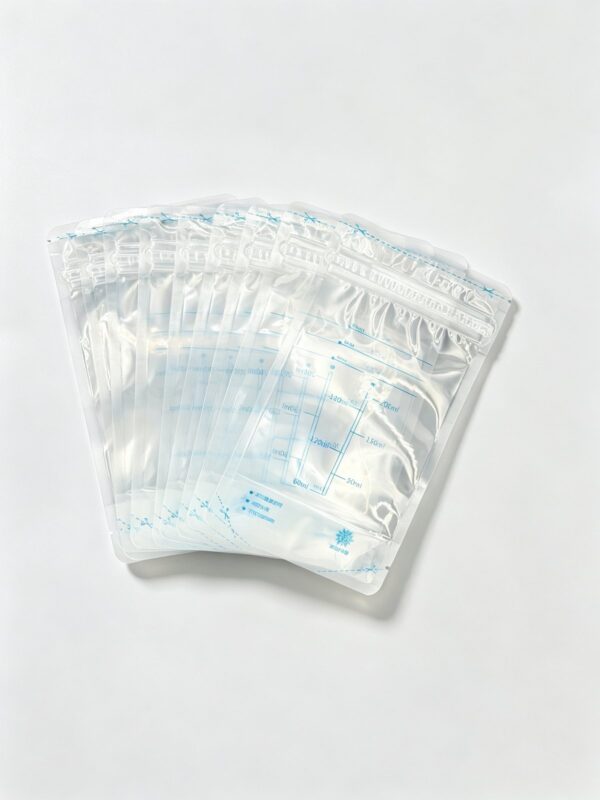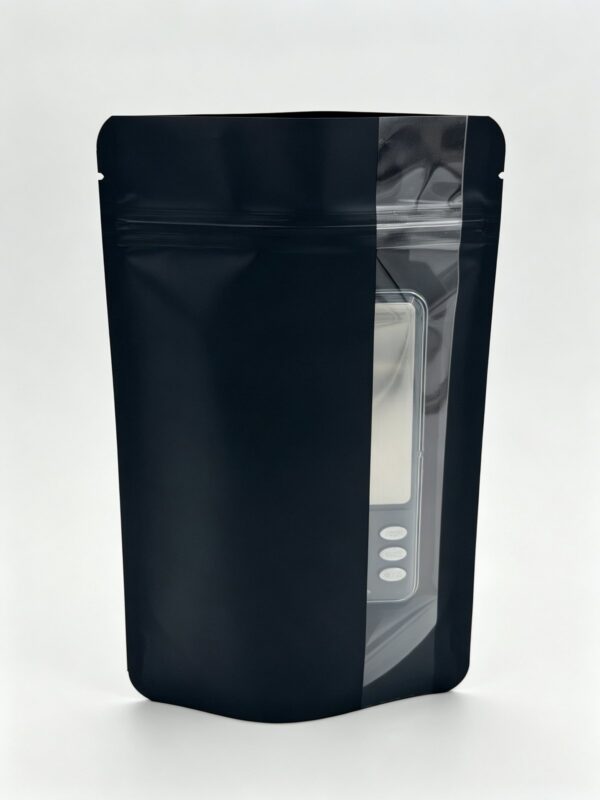
Choosing stand up pouch sizes starts with volume, not weight: the same 250 g fills a very different bag depending on whether the product is dense ground coffee or fluffy granola. Measure the bulk density of your product, add headspace for the zipper and top seal, and then match the result to a width × height + bottom gusset that suits your filling line and shelf. This guide explains how to do that measurement, gives approximate size families for 50 g to 1 kg, and shows when a flat-bottom pouch is the better choice.
Why bulk density matters more than fill weight
A pouch holds a volume, and different products fill that volume differently. Bulk density is the weight of product per unit of volume, including the air between particles. Whole coffee beans, granola, puffed snacks and freeze-dried fruit are light for their size; sugar, salt, rice, seeds and many powders are heavy. Two brands can both sell “500 g” and need pouches that differ by several centimeters in height.
This is why a supplier always asks what the product is. Powders add another variable: they trap air during filling and settle afterwards, so the pouch needs room for the loose, aerated state.
How to measure with a sample
You do not need laboratory equipment. A simple method that works for most dry products:
- Take a measuring container with a known volume (a kitchen measuring jug or a graduated cylinder is fine).
- Fill it loosely with the product, without pressing or tapping, and level the top.
- Weigh the contents. Weight divided by volume gives the bulk density in g/ml.
- Divide your target fill weight by the bulk density to get the product volume in ml.
- Add headspace: for a zippered stand up pouch, plan on roughly 20–30 percent extra volume above the product for the zipper, the top seal and comfortable filling.
Then pour that volume into a candidate pouch and see where the fill line lands. It should sit clearly below the zipper; if it reaches the zipper, the pouch is too small for that product regardless of the weight label.
Reading stand up pouch sizes: width × height + gusset
Stand-up pouch dimensions are written as width × height + bottom gusset, in millimeters. For example, 160 × 240 + 45 mm means:
- Width: the flat pouch measured across the front, seal edge to seal edge.
- Height: from the bottom fold to the top edge, including the top seal area.
- Bottom gusset: the depth of the folded-in bottom that opens up when the pouch is filled. A larger gusset gives a wider base, more capacity and better standing stability.
Two things reduce usable volume compared with the flat dimensions: the side seals take a few millimeters from each edge, and the zipper plus top seal take a band across the top. On a small pouch that band is a large share of the height.
Headspace for zipper and seal
Allow for the following above the product fill line:
- Top seal: the heat-seal band that closes the pouch after filling.
- Zipper: the press-to-close track and the space needed to open it with fingers.
- Tear notch area: the strip between seal and zipper that the consumer tears off.
- Working space: room for the filling nozzle and for the product to settle without being caught in the seal.
Product trapped in the seal is the most common cause of leaking pouches, especially with powders and oily products. If your line fills fast or uses a wide nozzle, ask the factory to increase the height rather than the width.
Approximate stand up pouch sizes by fill weight
The table gives approximate ranges for a typical free-flowing granular product of medium bulk density, such as roasted coffee beans, granola or dried fruit. Treat these as starting points only: denser products such as sugar, rice or seeds can use a smaller pouch, while light or bulky products need a larger one. Always confirm with a filled sample.
| Fill weight | Approximate width (mm) | Approximate height (mm) | Approximate bottom gusset (mm) |
|---|---|---|---|
| 50 g | 80–100 | 130–160 | 30–40 |
| 100 g | 100–120 | 160–190 | 30–40 |
| 250 g | 130–150 | 200–230 | 40–50 |
| 500 g | 160–180 | 240–270 | 45–55 |
| 1 kg | 200–240 | 300–340 | 60–70 |
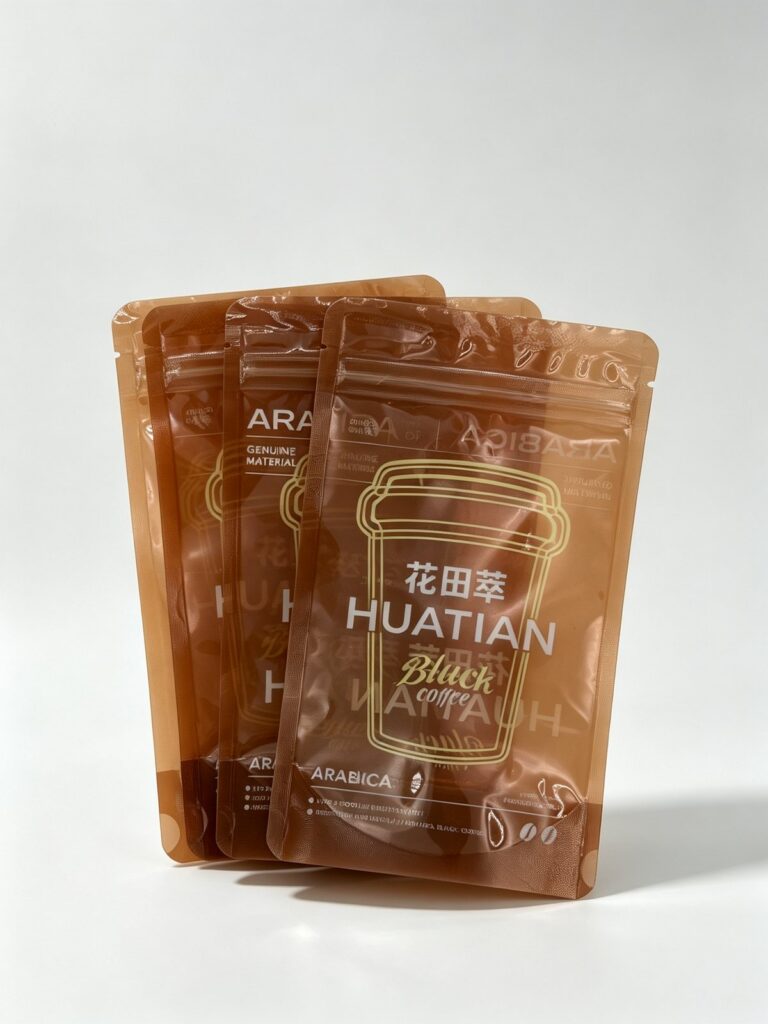
These families cover most retail applications for the stand-up zipper pouch format. A pouch such as the Stand-Up Printed Zipper Pouch can be made in any of these dimensions with the laminate adjusted to the product. The same size logic applies to stand-up window pouches; just leave enough unprinted area for the window.
When to switch to a flat-bottom pouch
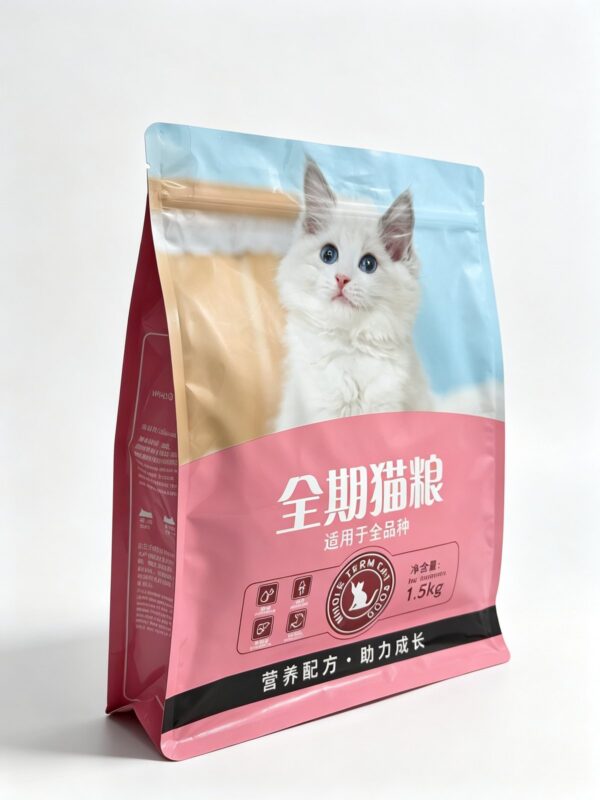
A stand up pouch with a bottom gusset works well up to roughly 500 g for most granular products. Beyond that, or when the product is heavy for its size, consider a flat-bottom pouch (also called a box pouch or eight-side seal). Signs that it is time to switch:
- The pouch bulges into a round shape and the front panel graphics distort.
- The pouch leans or falls on the shelf when partly used.
- You want a rectangular block shape that packs efficiently into cartons.
- You need five printable panels, including side gussets for ingredients or instructions.
Flat-bottom pouches use more film per unit and cost more to make, so for small packs a well-proportioned stand-up pouch is usually the better value. For coffee, pet food and 1 kg formats, the flat bottom often pays for itself in shelf presence and carton efficiency.
Confirming the size before production
Because printing cylinders are made for a specific pouch layout, dimensions must be fixed before artwork is finalized. The practical sequence is: measure bulk density, pick a candidate size, request unprinted samples in that size, fill them on your own line, then approve the print layout. Ruixiong Packaging makes samples and runs printing, laminating and bag-making in its own Dongguan factory, so a size adjustment after the first sample does not restart the project.
FAQ
What size stand up pouch do I need for 250 g of coffee?
For roasted beans, a pouch in the region of 130–150 mm wide and 200–230 mm tall with a 40–50 mm gusset is a common starting point. Ground coffee is denser, so a slightly smaller pouch may work. Fill a sample to confirm.
Can the same pouch size be used for different products?
Only if their bulk densities are similar. A pouch sized for granola will be half empty with sugar, and one sized for sugar will overflow with granola.
How much headspace should I leave above the product?
As a rule of thumb, plan for roughly 20–30 percent extra volume above the product to accommodate the zipper, top seal and filling. Powders and fast filling lines need more; dense, slow-filled products can use less.
If you would like help selecting stand up pouch sizes for your product, contact Ruixiong Packaging with your fill weight, product type and a sample if possible. We will recommend dimensions, provide samples to test on your line and take the confirmed size into production.