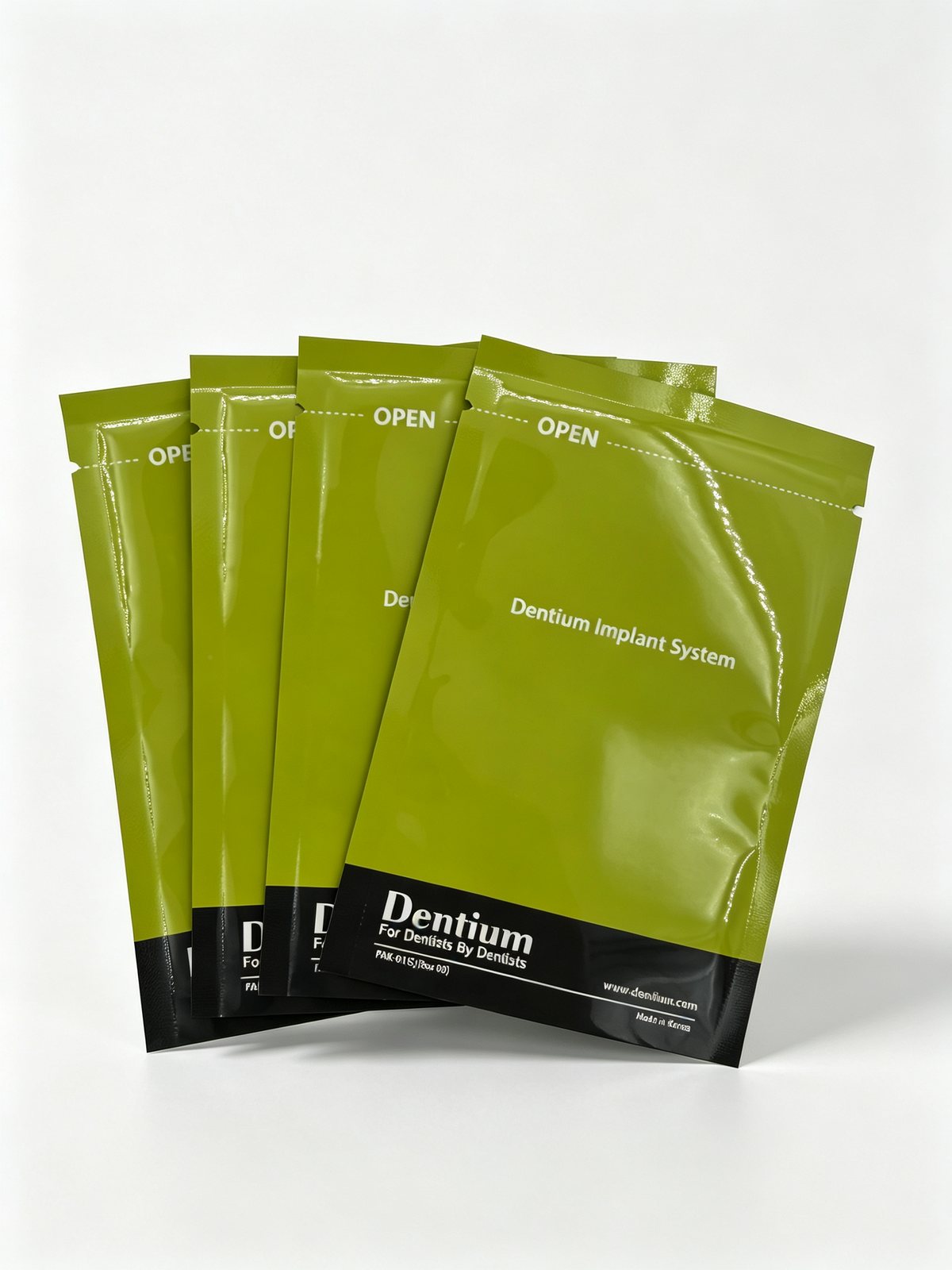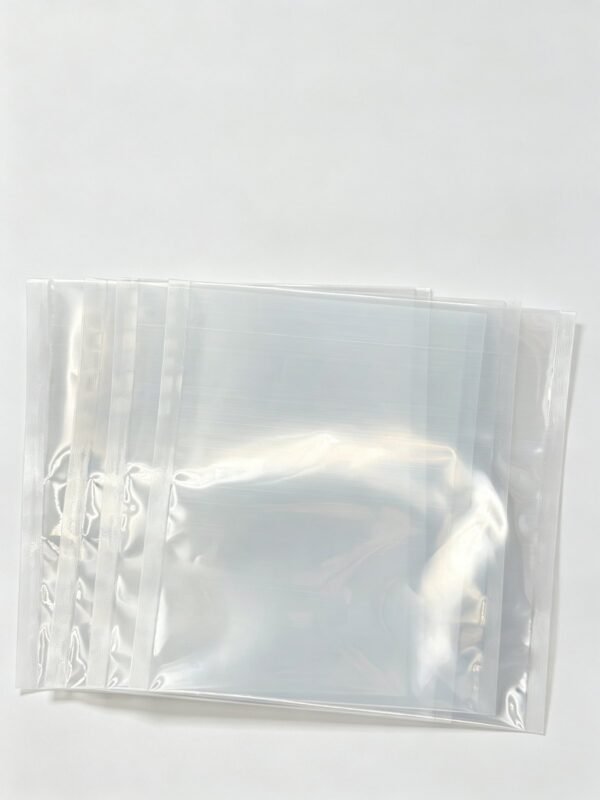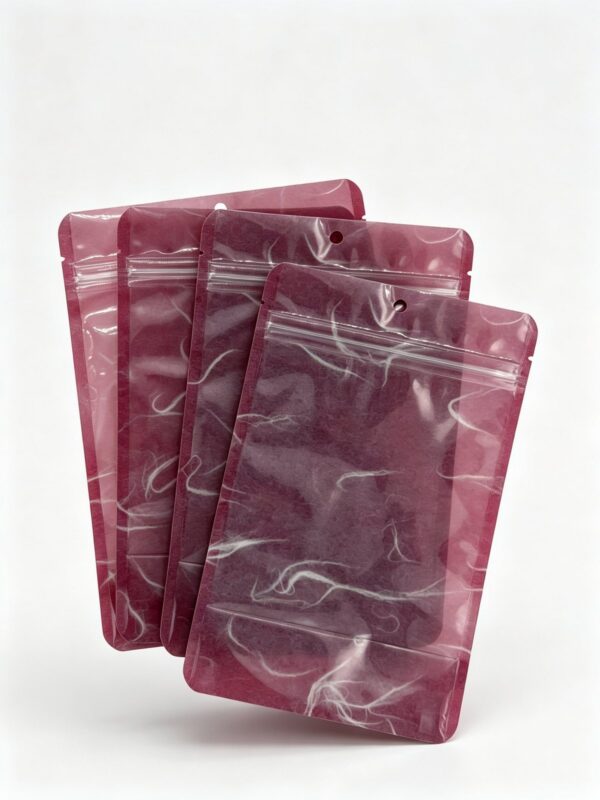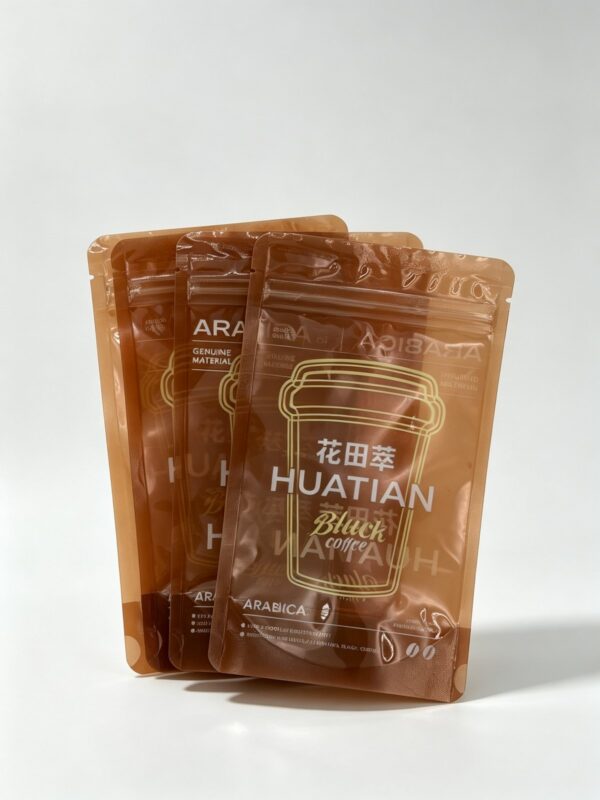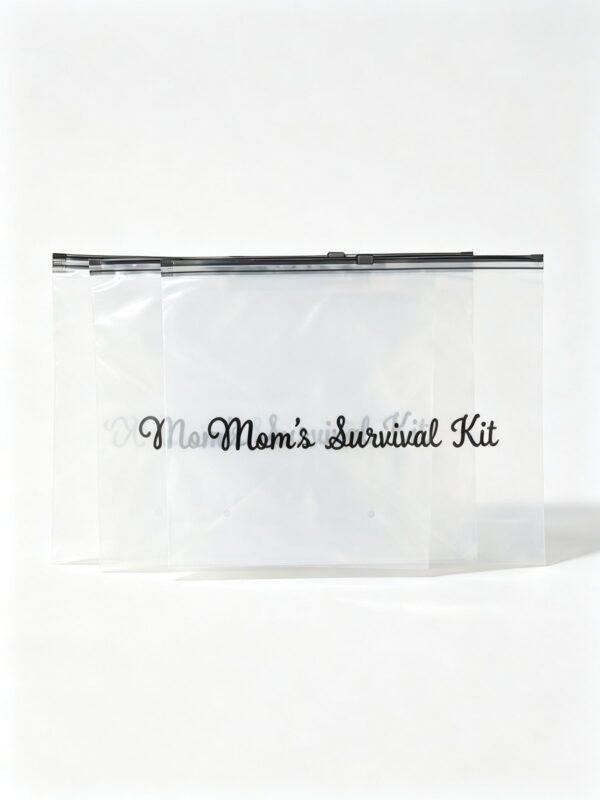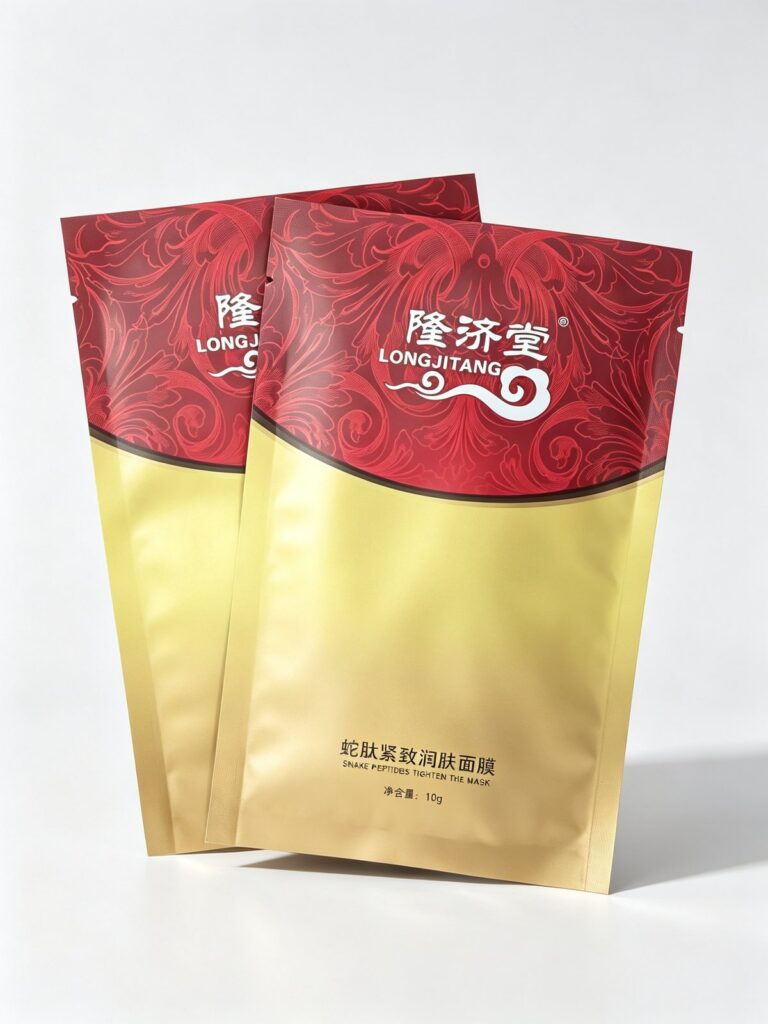
Most flexible packaging materials are laminates, not single films. A typical pouch bonds two to four layers, and each layer has one job: an outer layer for printing and stiffness (PET, BOPP or kraft paper), a middle layer for barrier or strength (aluminum foil, VMPET or nylon), and an inner layer that heat seals and touches the product (PE or RCPP). Once you know what each layer does, a code like PET/AL/PE becomes easy to read.
Why pouches are laminated
No single film prints sharply, blocks oxygen and light, resists puncture and also heat seals. Laminating solves this by combining films that each do one thing well. It also protects the artwork: most pouches are reverse printed on the inside of the outer film, so the ink is trapped between layers where it cannot scuff and does not touch the product.
Structures are written from outside to inside. PET/AL/PE means a PET outer film, aluminum foil in the middle and a PE sealant inside.
What each layer does
PET (polyester)
The most common outer layer. PET is stiff, stable under heat and tension, and prints very well by rotogravure. It comes in gloss or matte. Its own barrier is moderate, so it is paired with other layers when protection matters.
PE (polyethylene)
The usual inner sealant layer. PE melts at a relatively low temperature to form strong heat seals, is tough and flexible, and resists moisture well. It is a weak oxygen barrier. The PE thickness is a main lever for bag strength, so heavier fills use a thicker PE layer.
AL (aluminum foil)
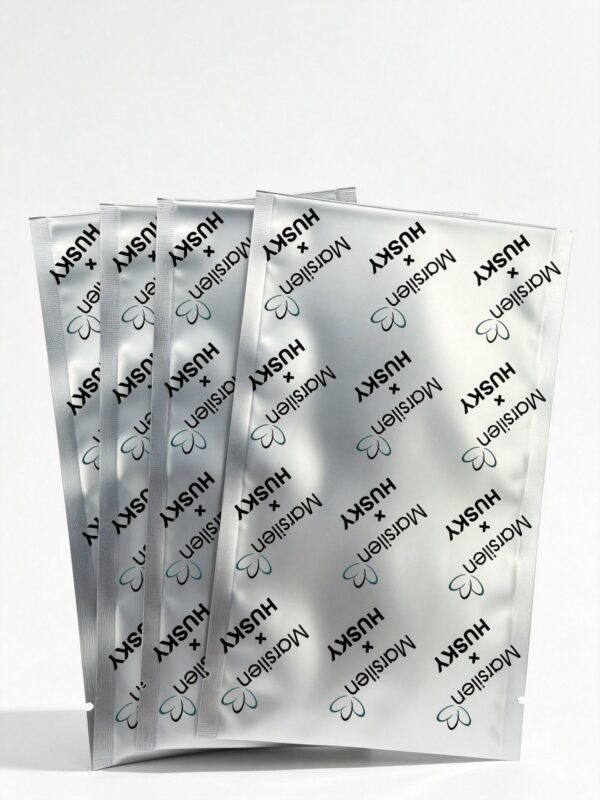
The highest barrier available in a pouch. Foil blocks light completely and is, for practical purposes, impermeable to oxygen, moisture and aroma. It is opaque, so no window is possible on a foil face, and it cannot go in a microwave. Foil can develop pinholes if flexed hard, which is why it is always sandwiched between films. See our three-side-seal pure foil pouch for a typical example.
VMPET (metallized PET)
PET film with a very thin layer of aluminum deposited in a vacuum. It gives a mirror-silver look and a barrier well above plain PET, though below pure foil, at a lower cost. Metallized pouches are a common middle ground for snacks, tea and powders.
NY (nylon, also written PA)
The strength layer. Nylon adds puncture, flex-crack and drop resistance and is a good oxygen barrier. It is used in vacuum bags, liquid pouches, frozen food bags, retort pouches and packs for sharp or hard products.
RCPP (retort-grade cast polypropylene)
A sealant that survives retort sterilization temperatures at which PE would soften. It is the inner layer of retort pouches.
Kraft paper
An outer layer chosen for its natural look and feel, and for stiffness. Paper has almost no barrier of its own and does not heat seal, so it is always laminated to PE, and to foil or metallized film when barrier is needed. Printing on kraft is more muted than on film.
Common flexible packaging materials and structures
| Structure | What it offers | Typical uses |
|---|---|---|
| PET/PE | Sharp print, reliable seals, basic moisture protection; can be clear or have a window | Snacks, candy, dry goods with faster turnover, non-food items |
| PET/VMPET/PE | Metallic look, good light, oxygen and moisture barrier at moderate cost | Snacks, tea, powders, pet treats |
| PET/AL/PE | High barrier to light, oxygen, moisture and aroma; opaque | Coffee, milk powder, pet food, light-sensitive products |
| PET/NY/AL/RCPP | High barrier plus heat and puncture resistance for retort sterilization | Ready meals, sauces, wet pet food |
| Kraft/PE | Natural paper look with basic moisture protection | Bakery, tea, dry foods sold quickly |
| Kraft/AL/PE | Paper look outside, high barrier inside | Coffee, tea, premium dry foods |
| Pearl film/PE | White pearlescent surface, soft sheen, opaque face | Facial masks, daily goods, confectionery |
| Holographic film/PE | Rainbow laser effect that shifts with the light | Cosmetics, gifts, promotional packs |
Single-film materials such as BOPP, CPE, PO, PVC and POF are used for general plastic bags, header bags and shrink film rather than barrier pouches. The full range of laminated formats is in our laminated pouches series.
How to pick a structure by product need
Moisture
Crisp snacks, powders and dried foods pick up moisture. PE and BOPP already resist water vapor well, so PET/PE is enough for many dry goods. Powders that cake easily, and freeze-dried foods, usually step up to metallized film or foil.
Oxygen
Fats and oils turn rancid and aromas fade when oxygen gets in. Nuts, coffee, pet food and milk powder typically need VMPET or AL in the structure. A nylon layer also helps.
Light
Light speeds up oxidation and fades colors. Foil blocks it completely and metallized film blocks most of it. A clear window lets light in, so keep windows small on light-sensitive products.
Puncture and drops
Bones, pasta, frozen foods, vacuum packs and liquids stress the film. Add a nylon layer and a thicker PE sealant, and test with your real product at its real fill weight.
Retort and boiling
Products sterilized in the pouch need a retort pouch structure such as PET/NY/AL/RCPP, or a clear nylon-based laminate when visibility matters. Tell your supplier the process temperature and time so the structure can be matched to it.
Look and feel
Gloss film gives saturated color; matte film gives a quieter, premium surface. Metallized and holographic films catch the eye. Kraft signals natural and handmade, and kraft stand-up zipper pouches combine that look with a plastic inner laminate for protection.
A note on recycling
Be careful with sustainability claims. Multi-material laminates, especially those containing foil or paper bonded to plastic, are not easily recyclable in most collection systems, and a kraft face does not change that. Mono-material structures, made entirely from one polymer family, are easier to recycle, but they usually give up some barrier, stiffness or heat resistance. Availability and suitability for your product should be confirmed with your supplier.
FAQ
What is the difference between AL and VMPET?
AL is a solid layer of aluminum foil. VMPET is a PET film with a microscopically thin aluminum coating. Foil gives the higher barrier and total light block; VMPET costs less, tolerates flexing better and still protects most dry foods well.
Are these materials safe for food contact?
Food pouches use sealant layers made for food contact, and the ink is trapped between layers. Ask for documentation for your market. Ruixiong can provide third-party test reports such as FDA food-contact, RoHS and halogen reports.
What should I tell a supplier to get a material recommendation?
The product and its sensitivities, fill weight, target shelf life, filling method, storage and shipping conditions, and the look you want. With that, a structure can be proposed and confirmed by sampling.
Ruixiong Packaging prints, laminates and converts all of these structures in-house at its Dongguan factory. To get a structure recommendation and a quote for your product, contact our team.