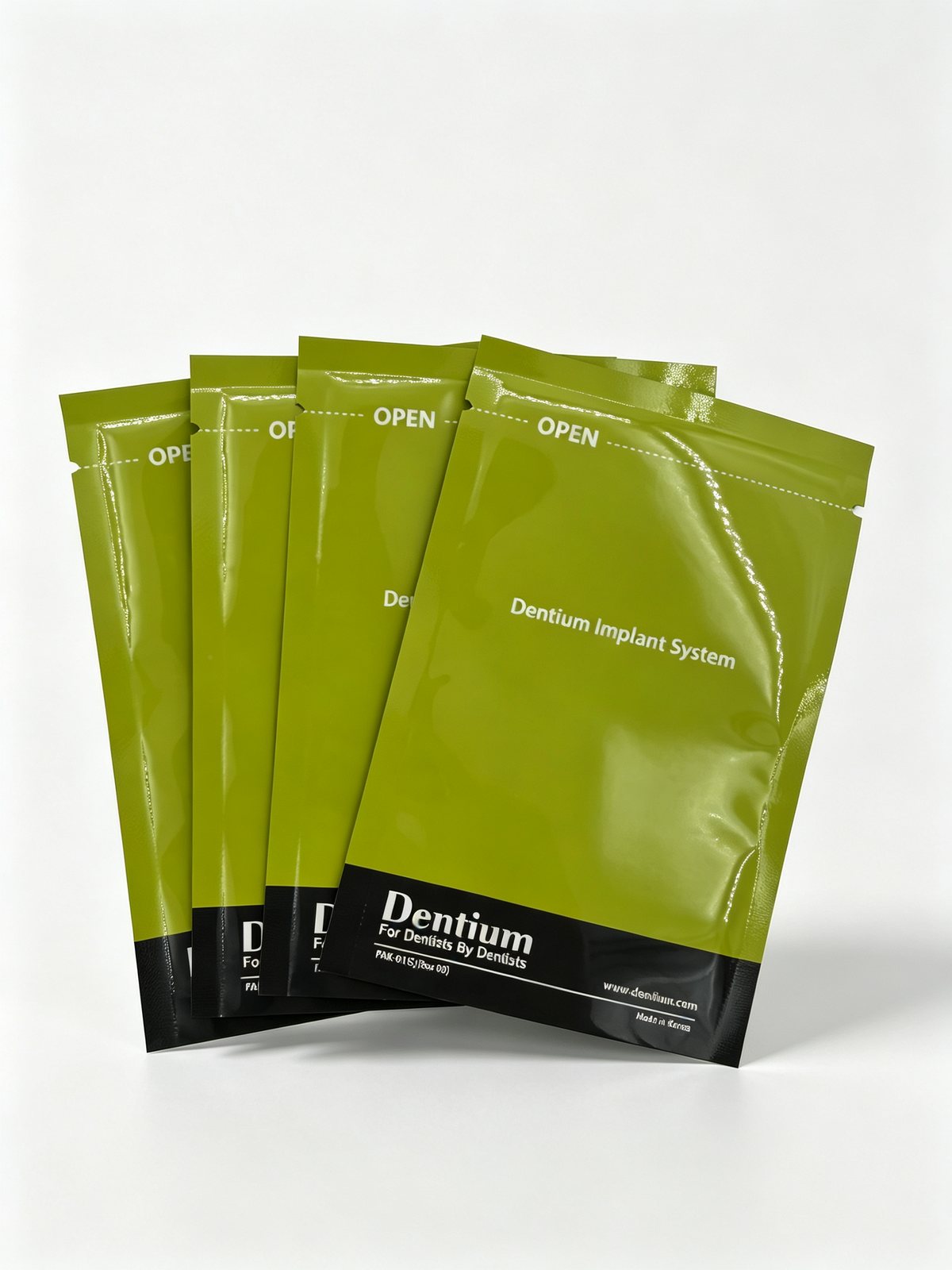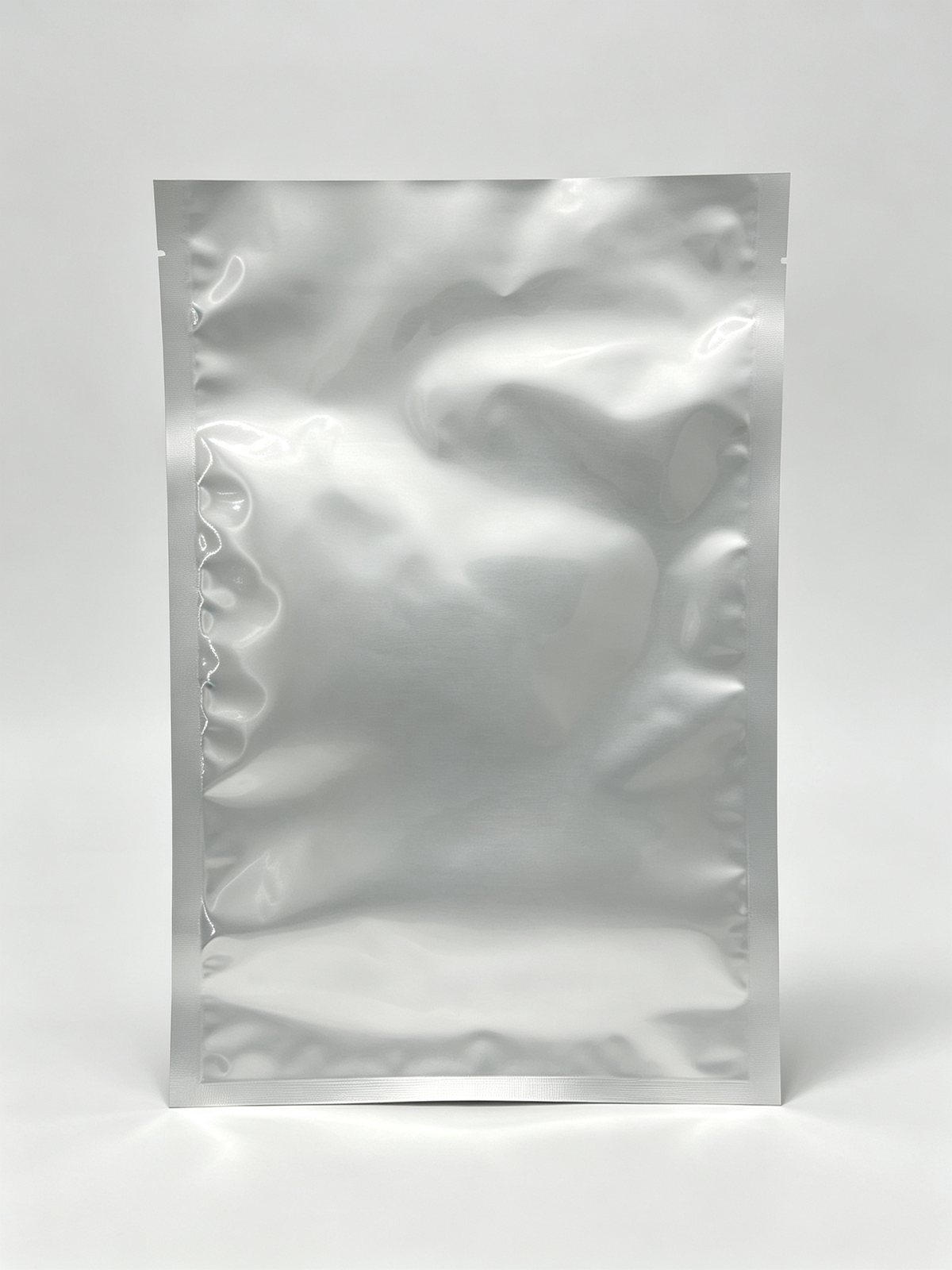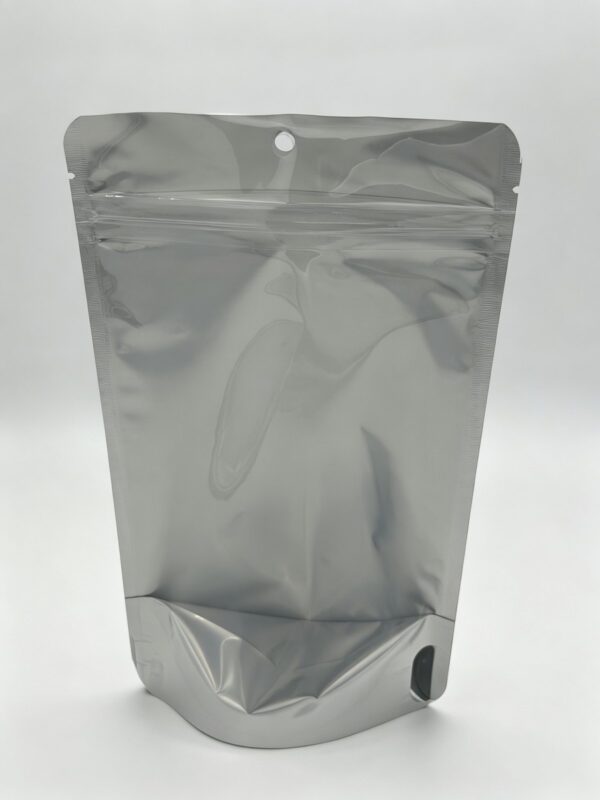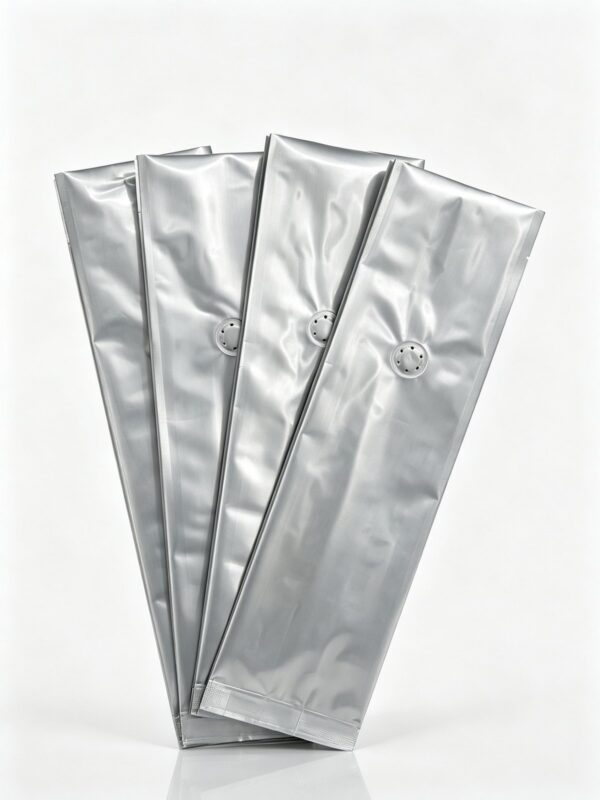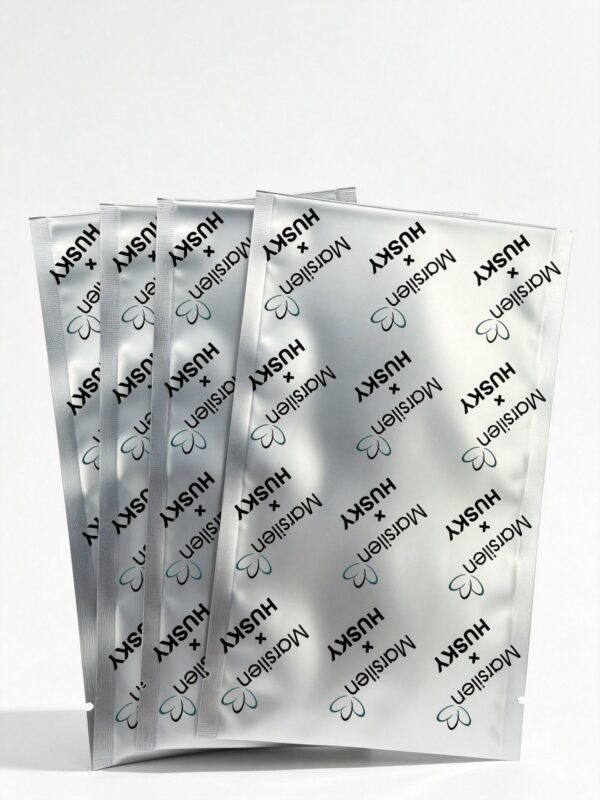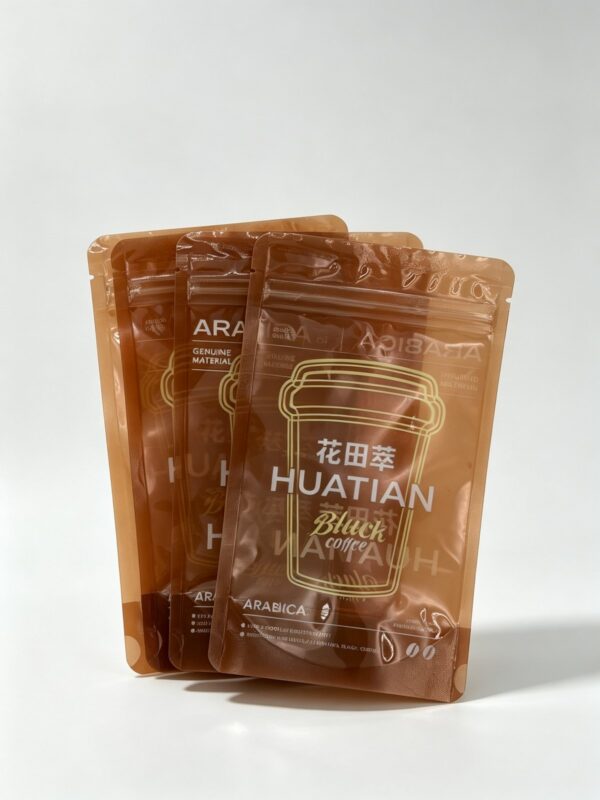
The choice between aluminum foil vs metallized pouches comes down to how much metal is actually in the laminate. A foil pouch contains a continuous sheet of rolled aluminum (written AL, as in PET/AL/PE) and gives a near-total barrier to light, oxygen and moisture. A metallized pouch uses a plastic film, usually PET, carrying an extremely thin vacuum-deposited aluminum coating (VMPET): it looks similar, costs less and flexes better, but its barrier is good rather than absolute.
How each material is made
Pure aluminum foil laminates
Aluminum foil is solid metal rolled down to a very thin sheet. On its own it tears easily and cannot be heat sealed, so it is always laminated between other films. A typical structure is PET/AL/PE: printed PET on the outside for strength and graphics, foil in the middle for barrier, and PE on the inside for heat sealing. Heavier-duty versions add nylon for puncture resistance, and retort pouches use PET/NY/AL/RCPP so the pack can survive high-temperature sterilization.
Vacuum-metallized film (VMPET)
Metallized film starts as ordinary clear PET film. Inside a vacuum chamber, aluminum is vaporized and condenses on the film surface as a coating that is only a tiny fraction of the thickness of foil. The result is still a plastic film, just with a bright metallic face. It is then laminated like any other web, most commonly as PET/VMPET/PE.
Aluminum foil vs metallized pouches: side-by-side comparison
| Property | Pure foil laminate (e.g. PET/AL/PE) | Metallized laminate (e.g. PET/VMPET/PE) |
|---|---|---|
| Metal layer | Continuous rolled aluminum sheet | Very thin aluminum coating deposited on PET film |
| Light barrier | Fully opaque | Blocks most light; a faint glow may show against a strong lamp |
| Oxygen and moisture barrier | Highest available in flexible packaging while the foil is intact | Good, clearly better than plain PET/PE, but not absolute |
| Flex-crack resistance | Weaker: repeated creasing can cause pinholes | Better: the coating sits on a flexible film |
| Look and feel | Soft silver interior, stiff, holds a fold | Mirror-bright, lighter, springs back when folded |
| Relative cost | Higher | Lower |
| Typical uses | Coffee, powders, vacuum packs, retort food, moisture-sensitive goods | Snacks, dried fruit, tea, pet treats, fast-moving products |
Barrier performance in practice
Light. Foil is completely opaque. Metallized film blocks the great majority of light, which is enough for most products, but it is not a total blackout. For products that fade or turn rancid quickly under light, that small difference can matter.
Oxygen and moisture. Intact foil is essentially impermeable, so the real-world performance of a foil pouch is decided by its seals, zipper and any valve rather than by the wall itself. Metallizing greatly improves plain PET, but the result depends on coating quality and the rest of the structure. Transmission values vary by structure and thickness, so ask your supplier for test data on the exact laminate you plan to buy.
Flex cracking: the weak point of foil
Foil is metal, and metal does not stretch. When a foil pouch is folded, crumpled or vibrated again and again in transit, tiny cracks and pinholes can form along the creases. Sandwiching the foil between tough films, and adding a nylon layer, reduces the problem considerably, and a well-made foil pouch keeps an excellent barrier through normal handling. Raise it with your supplier if the pack is large, vacuum-packed around sharp-edged contents, or headed for a rough distribution route.
Metallized film tolerates bending better because the coating rides on a flexible base film. Its starting barrier is lower, however, and heavy stretching or scratching can also damage the coating.
Appearance and printing
Both structures are reverse printed on the outer PET film, so the artwork is protected inside the laminate. With metallized film, designers often leave areas without white ink so the mirror-silver shows through, or print transparent inks over it for metallic gold, red or blue effects. Foil gives a softer, satin silver and a stiffer hand feel. If a bright metallic look is the main goal, metallized pouches usually deliver it at lower cost.
What drives the cost difference
- Material. Foil contains far more aluminum per square meter than a metallized coating, and aluminum prices move with the metals market.
- Layers. Foil structures normally need three or four layers, which means extra lamination passes and curing time.
- Weight. Heavier laminate means higher freight cost per thousand bags.
- Size and quantity. The gap per bag changes with bag size, thickness and order volume, so request quotes for both structures.
When to choose which
Choose a pure foil laminate when:
- the product is highly sensitive to oxygen, moisture or light, such as ground coffee, milk powder, seasoning powders or moisture-sensitive components;
- you need a long shelf life through export shipping and warehousing;
- the pack will be vacuum sealed, as with foil vacuum bags, or retort sterilized;
- a stiff, premium feel supports the brand, as in a quad-seal foil coffee bag with a one-way valve.
Choose a metallized laminate when:
- the product is moderately sensitive and turns over quickly, such as snacks, dried fruit, tea or pet treats;
- unit cost and pack weight matter;
- you want a bright mirror finish or special effects;
- the pack will be flexed often, such as small sachets carried in pockets.
Where clear high-barrier and duplex pouches fit
Some products sell better when shoppers can see them. Clear high-barrier laminates use transparent barrier films in place of metal; they improve oxygen and moisture protection over plain PET/PE but offer no light barrier, and availability should be confirmed with your supplier. A duplex foil pouch takes another route: one face is pure foil and the other is clear. It looks premium and shows the product, but the overall barrier is limited by the clear face, so treat it mainly as a presentation choice.
One practical note: foil laminates generally cannot pass through a conventional metal detector on the filling line, and metallized film may reduce its sensitivity, so tell your packer early.
FAQ
Is a metallized pouch the same as a foil pouch?
No. A metallized pouch is a plastic laminate with a very thin aluminum coating, while a foil pouch contains a solid aluminum layer. Foil has the higher barrier and the higher cost.
Which is better for coffee?
Roasted coffee is sensitive to oxygen, moisture and light, so foil with a one-way valve is the traditional choice for long distribution. Metallized structures can work for fast-turnover products; test with your own product first.
Can these pouches be recycled?
Both are multi-material laminates and are not easily recyclable in most collection systems. If recyclability is a priority, ask your supplier whether a mono-material structure can meet your barrier needs.
Ruixiong Packaging prints, laminates and converts both pure foil pouches and metallized pouches in its own Dongguan factory, and can supply third-party test reports on request. Tell us your product, fill weight and target shelf life, and we will suggest a structure and send samples: contact our team.