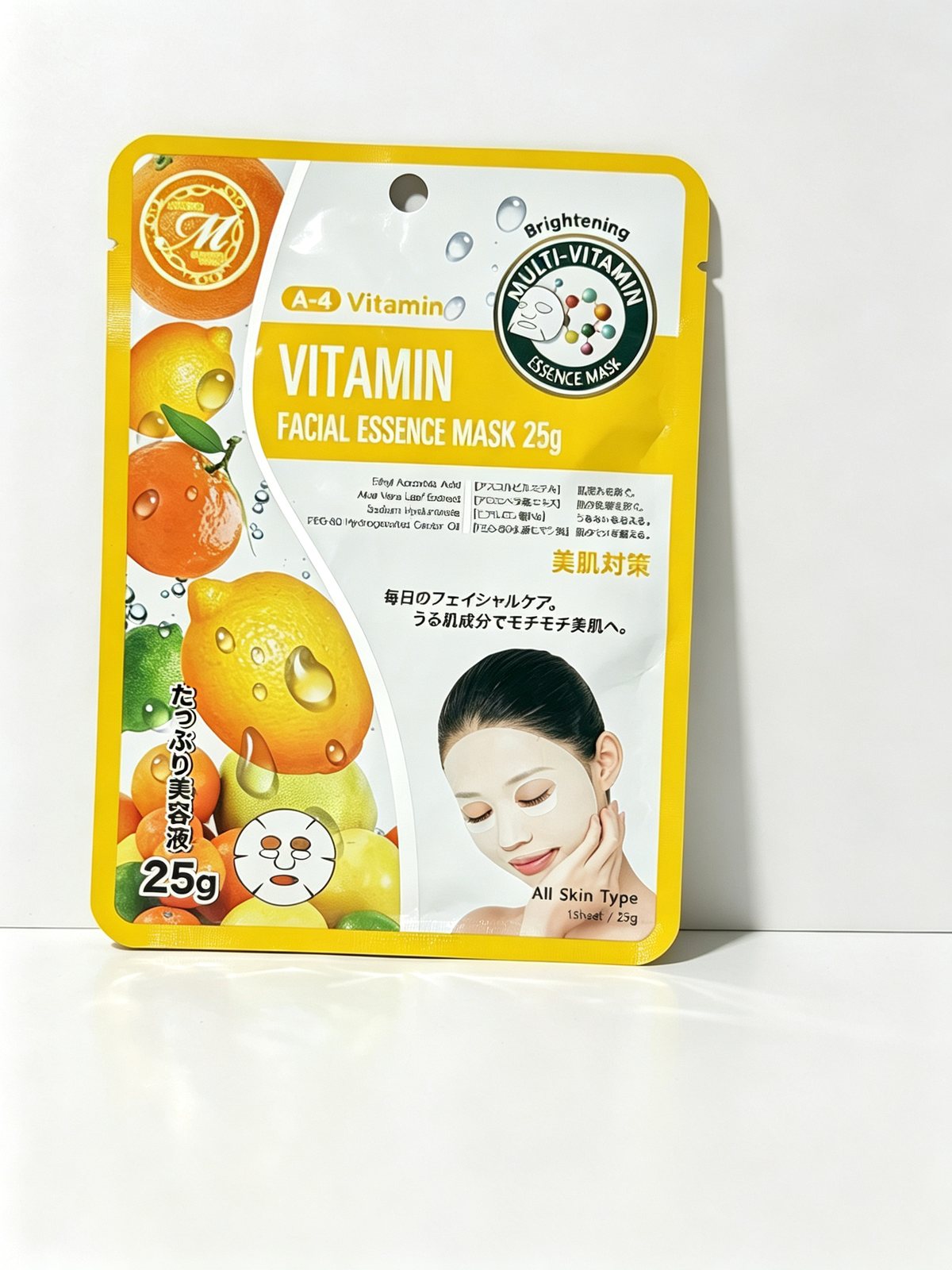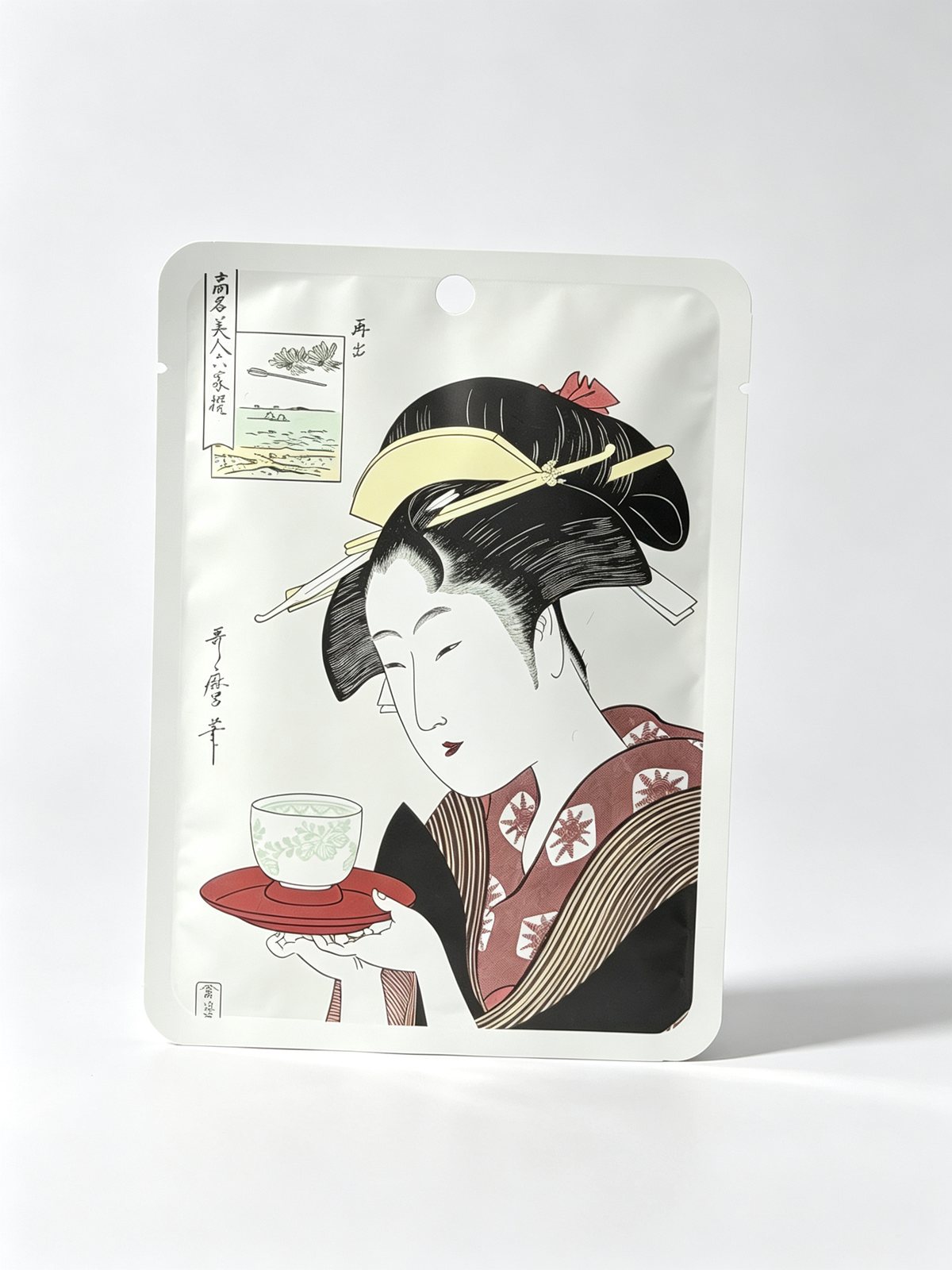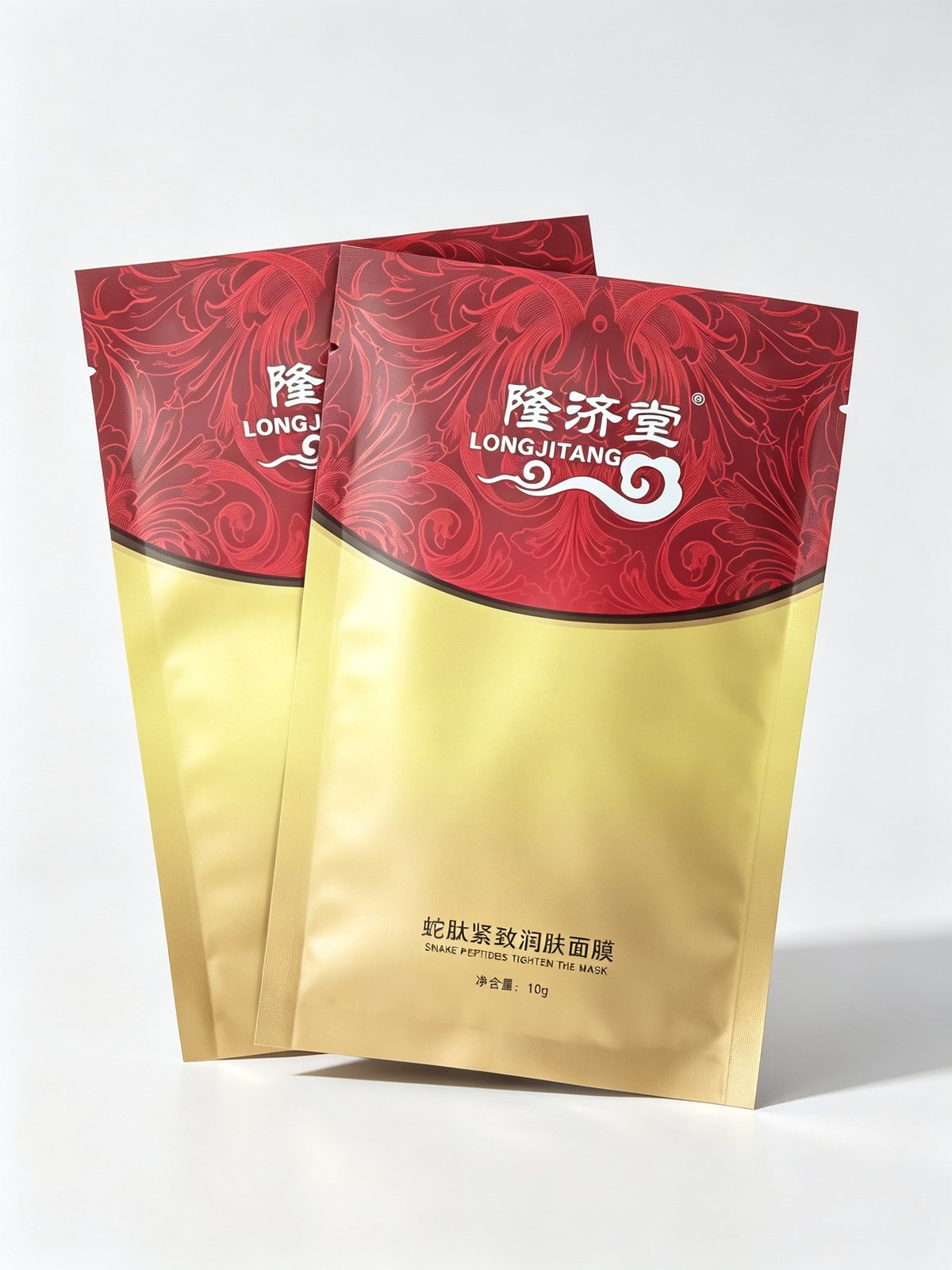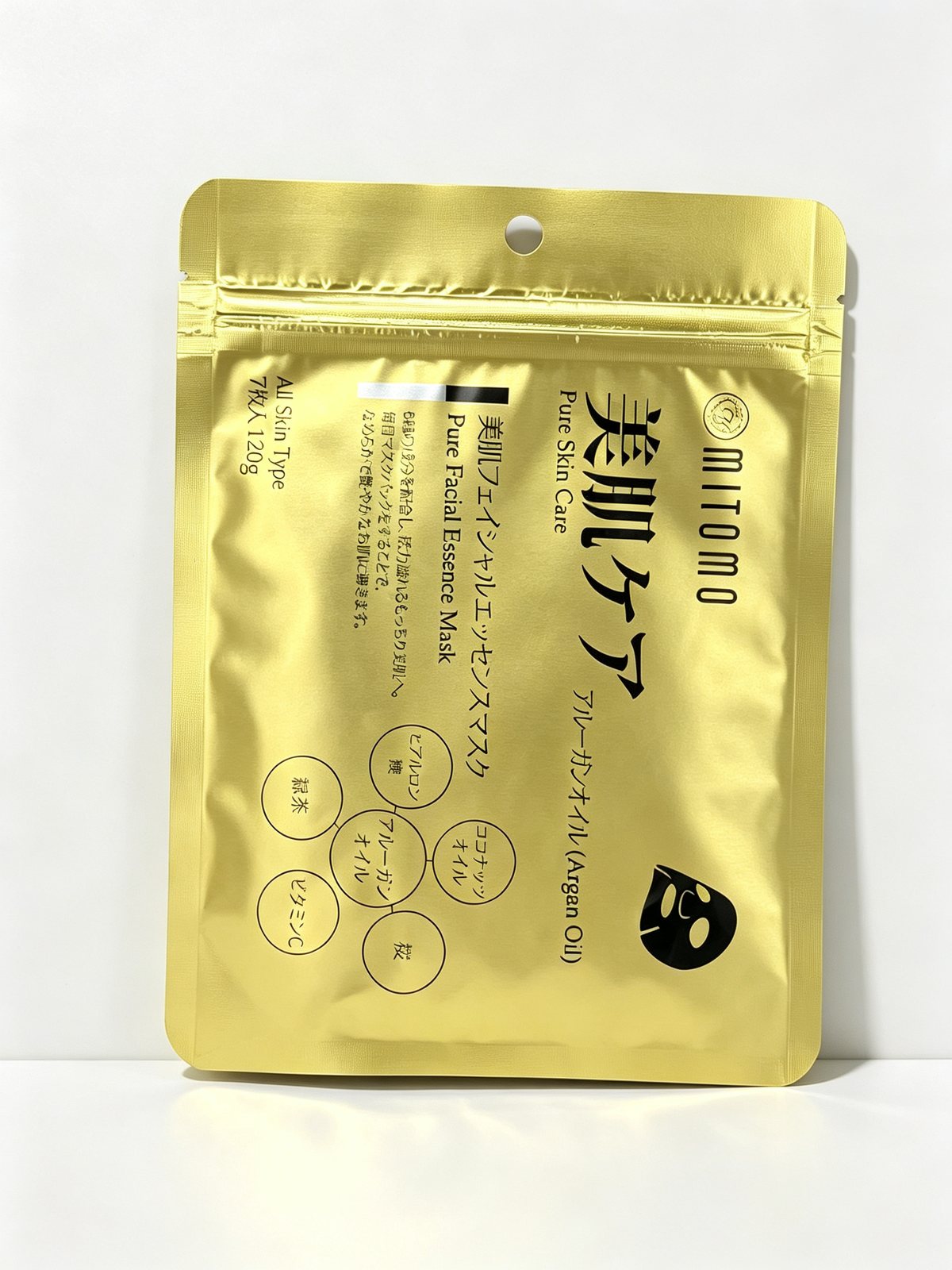
Facial mask packaging has one main job: to keep a serum-soaked sheet as wet, stable and clean as it was on the filling line. That calls for a high-barrier laminated pouch, usually a three-side-seal sachet with a foil or metallized layer, a tear notch and a print finish that fits the brand. This guide explains how to choose the structure, the format and the details, and what to ask a supplier to test before you order.
Why facial mask packaging needs a high barrier
A sheet mask is a fabric or gel sheet sitting in liquid serum. The pouch is the only thing between that liquid and the outside world, and three things work against it:
- Serum evaporation: water and volatile ingredients slowly pass through weak films. The sheet dries out and the pack loses weight long before the consumer opens it.
- Light: many cosmetic ingredients and fragrances change color or smell when exposed to light.
- Oxygen: oxidation can alter oils, plant extracts and other sensitive ingredients.
The seals matter as much as the film. Serum often wets the seal area during filling, so the inner layer has to seal reliably through that contamination, and the whole laminate has to resist the serum over time.
Foil, metallized or clear: choosing the structure
Aluminum foil
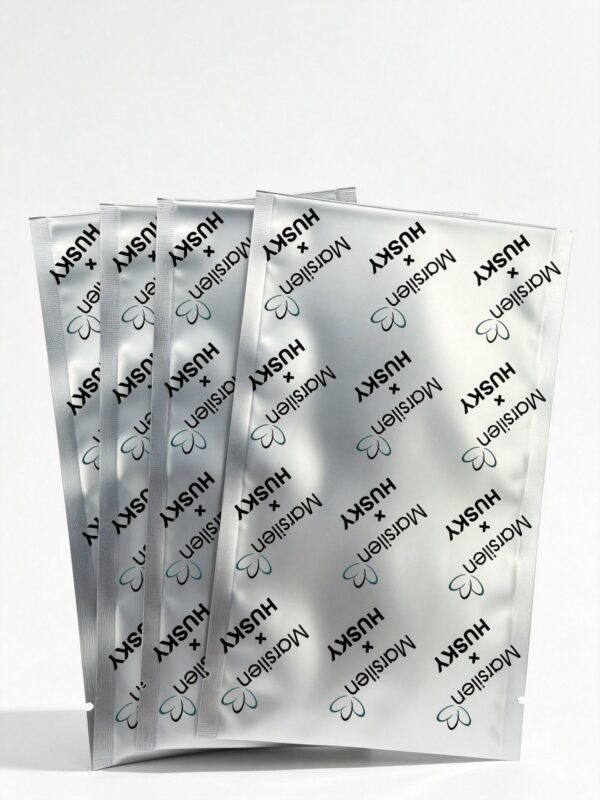
A pure foil layer, as in PET/AL/PE, gives the highest barrier and blocks light completely. It is the usual structure for sheet masks that ship far or sit in distribution. Ruixiong’s three-side-seal foil laminate pouch is of this type. The trade-offs are a higher cost and the fact that foil can crack at hard creases.
Metallized film
PET/VMPET/PE uses a vacuum-deposited aluminum layer. It gives a bright metallic look and a good barrier at lower cost, as in the three-side-seal metallized pouch. The barrier is lower than that of foil, so it suits faster-moving products or less sensitive formulas. Confirm the choice with a storage test.
Clear structures
Clear laminates show the product, which suits dry items such as cotton pads or beauty tools. For wet sheet masks they are rarely the right choice, because they admit light and usually have a weaker moisture barrier.
| Structure | Barrier | Light protection | Typical use |
|---|---|---|---|
| PET/AL/PE (foil) | Highest | Full | Sheet masks, serum sachets, export goods |
| PET/VMPET/PE (metallized) | Good | High | Fast-moving masks, promotional sachets |
| PET/PE (clear) | Basic | None | Dry cosmetic accessories |
Single-dose sachets vs multi-pack zipper pouches
Three-side-seal single-dose sachet
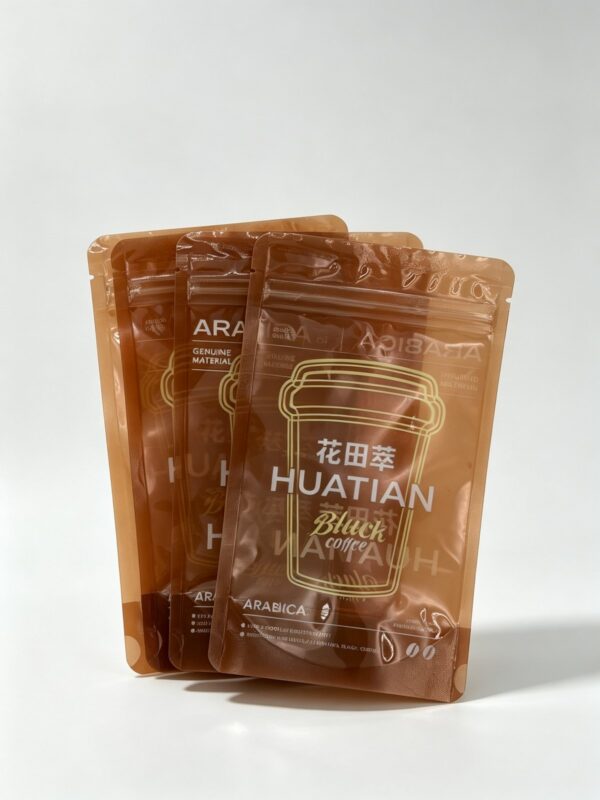
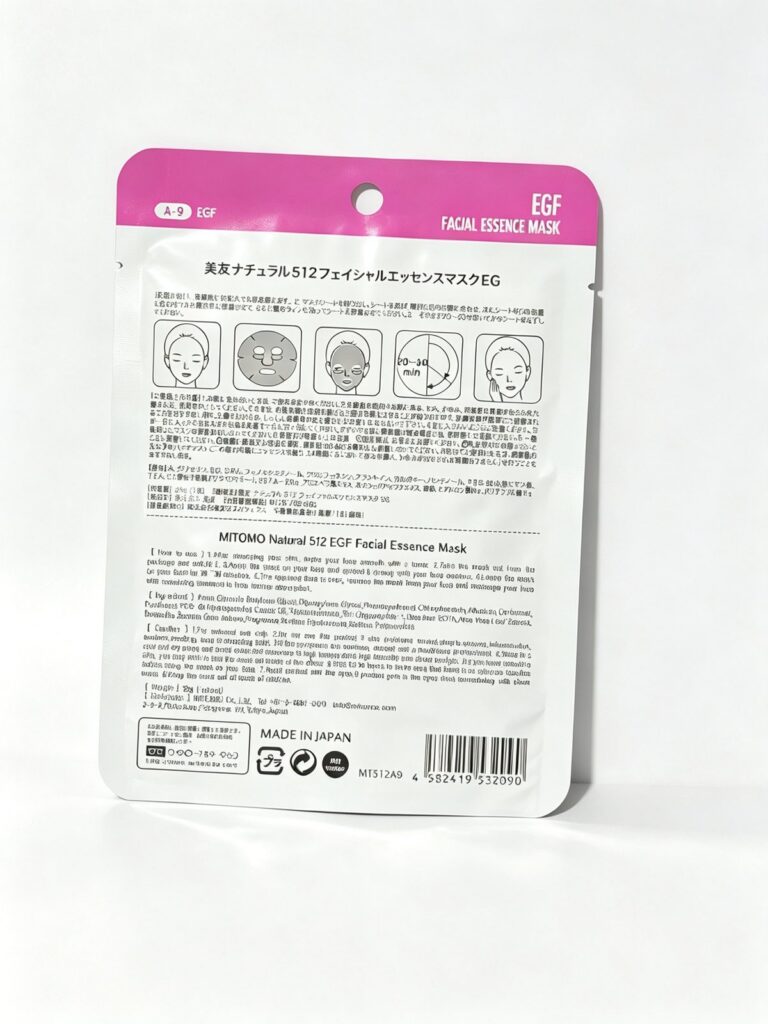
The standard sheet mask pack is a flat three-side-seal pouch: three sides are sealed by the pouch maker and the fourth after filling. It is economical, easy to box and display, and offers two full print faces. Ruixiong makes several versions, including facial mask pouch type 6, type 7 and type 8. In smaller sizes, the same format works for cream, serum and sample sachets.
Multi-pack zipper pouch
A larger three-side-seal zipper pouch can hold several sheets in shared serum, a set of individually wrapped sachets, or dry products such as eye patches. After opening, the zipper slows evaporation but does not restore the original barrier, so multi-sheet packs suit products that are used up within a short period. A heat seal above the zipper provides tamper evidence.
Tear notch, hang hole and other details
- Tear notch: essential on a single-use sachet. Check on samples that the laminate tears straight across, because some structures tear unevenly and spill serum.
- Hang hole: a round or euro-style hole in an extended top seal allows peg display. It must sit inside the sealed area, never in the product cavity.
- Rounded corners: they feel softer in the hand and look more premium than sharp corners.
- Shaped outlines: die-cut profiles are possible, but discuss the effect on seal width and filling first.
Matte, gloss and spot finishes
The finish is decided by the outer film and the varnish, and it strongly affects how a skincare product is perceived.
- Gloss: bright, saturated color. This is the default.
- Matte: a matte film or matte varnish gives a soft, calm look, and slightly mutes colors.
- Spot matte: a registered matte varnish leaves selected areas, such as the logo or product image, glossy for contrast.
On foil or metallized film, areas printed without white ink let the metal show through, which creates metallic logos and accents without extra materials. Ruixiong prints by rotogravure in 1 to 10 colors, with printing, laminating and bag-making done in-house.
Multi-language printing for export
Cosmetic packs carry a lot of text: ingredient lists, directions, warnings, batch and date codes and importer details, often in several languages.
- Decide early between one artwork per market and one shared multi-language back panel. If designs share their color layers and differ only in text, ask whether changing a single text cylinder is possible, since that limits cylinder cost.
- Keep small text as dark, solid type on a white or light panel. Fine reversed-out text on a metallic background is hard to read.
- Leave a blank area for batch and expiry coding by inkjet, or for a market-specific sticker.
Labeling rules differ by market. Your regulatory advisor should confirm the content; the printer reproduces the artwork you approve.
Compatibility testing between serum and inner layer
Serum is chemically active. Water, humectants, oils, alcohol, fragrance, acids and preservatives can migrate into the sealant layer, weaken the adhesive between layers and cause delamination, or the film can absorb fragrance from the formula. Ask the supplier for:
- A storage test of pouches filled with your real serum, including warm conditions, checking for delamination, leaks, odor change and weight loss.
- A seal strength check after storage, not only on fresh pouches.
- Details of the inner layer and adhesive system, and advice on whether a more chemical-resistant grade is advisable.
- Third-party test reports where your market requires them.
We quote no test values here, because results depend on the formula and structure. A pouch that works for one serum is not automatically right for another.
Small-batch sampling
Skincare ranges change quickly, and a new formula should never go straight to a volume order. Ruixiong handles small-batch sampling as well as volume orders, provides digital or physical proofs, and stores customer cylinders for faster reorders. Use the sampling stage to run a trial on your filling line, start the storage test and check color and finish under store lighting.
FAQ
Is foil always necessary for sheet masks?
No, but it is the safest default. Metallized structures can work for fast-moving or less sensitive products. Decide with a storage test using your own serum, not from the material name alone.
Can one pouch design serve several markets?
Often, yes, with a multi-language back panel and a blank coding area. Check each market’s labeling rules with your regulatory advisor before approving the artwork.
Can mask packaging be supplied as roll film?
Yes, in principle. Premade pouches suit most mask filling lines, while form-fill-seal machines use printed roll film, which Ruixiong also produces. Tell us which equipment you run.
Send us your sheet size, serum type, target markets and the look you want, and we will suggest a structure, format and finish with a quote. Contact Ruixiong Packaging to discuss your facial mask packaging.