The right pet food packaging bags depend on what goes inside. Dry kibble needs a grease-resistant, oxygen-barrier laminate in a strong bag that reseals and carries weight, usually a flat-bottom or quad-seal pouch. Treats suit stand-up zipper pouches, often with a window, and freeze-dried food needs the highest moisture and oxygen barrier you can give it. This guide walks through the requirements, formats and structures so you can brief a supplier clearly.
What pet food demands from a bag
- Grease resistance: kibble and many treats are coated with fats and oils. Grease can stain paper faces, show through weak films and attack poor lamination, so the inner layers and adhesive have to cope with it.
- Oxygen barrier: those same fats turn rancid when exposed to oxygen, and pets notice stale food quickly. Barrier also keeps the strong smell of pet food inside the bag.
- Puncture resistance: hard kibble edges, bones and dental chews press against the film during filling, stacking and shipping.
- Reseal: a bag of pet food is opened daily for weeks. A reliable zipper or slider is expected.
- Load capacity: large bags carry real weight. Seals, gussets and handles must survive drops and rough handling.
- Moisture barrier: essential for crunchy treats and critical for freeze-dried products.
Requirements by product type
Dry kibble
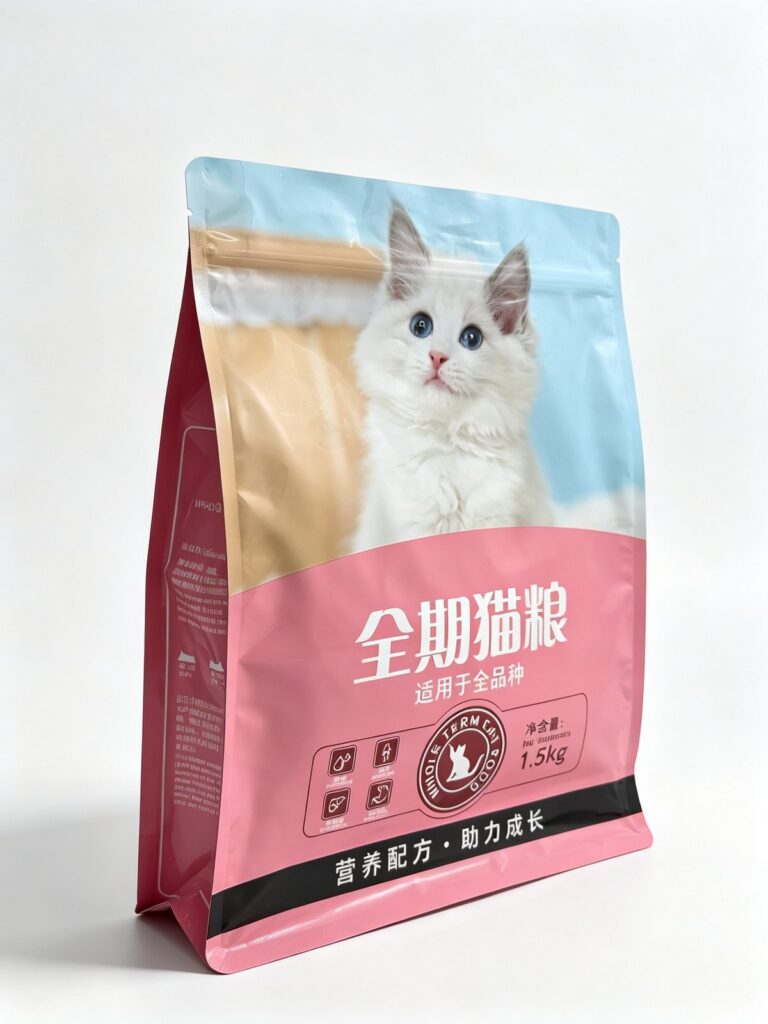
Kibble combines fat, weight and sharp edges. Small and medium bags typically use PET/AL/PE or PET/VMPET/PE, with a PE sealant thick enough for the fill weight. Large bags usually add a nylon layer or a heavier sealant for drop resistance. A flat-bottom or quad-seal shape keeps the bag upright on the shelf and at home. Our flat-bottom zipper pet food bag uses a PET/AL/PE laminate for a strong light and oxygen barrier.
Treats and chews
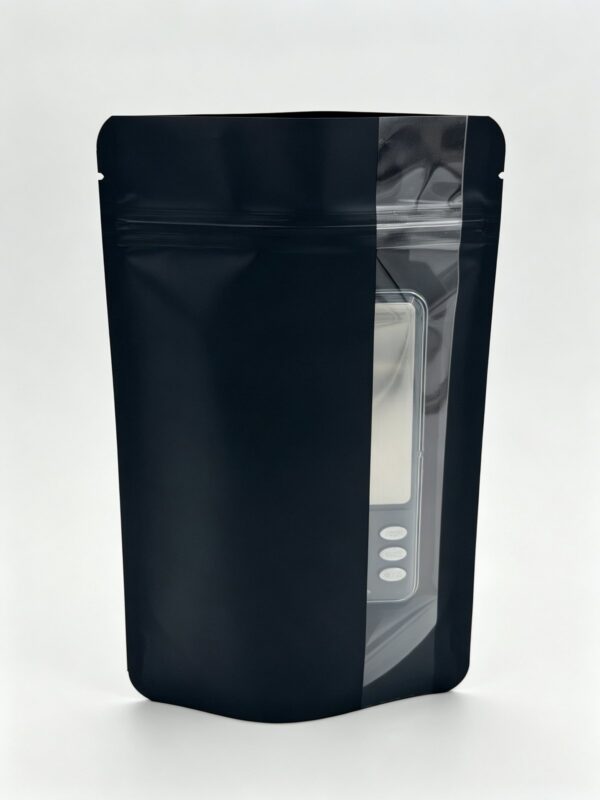
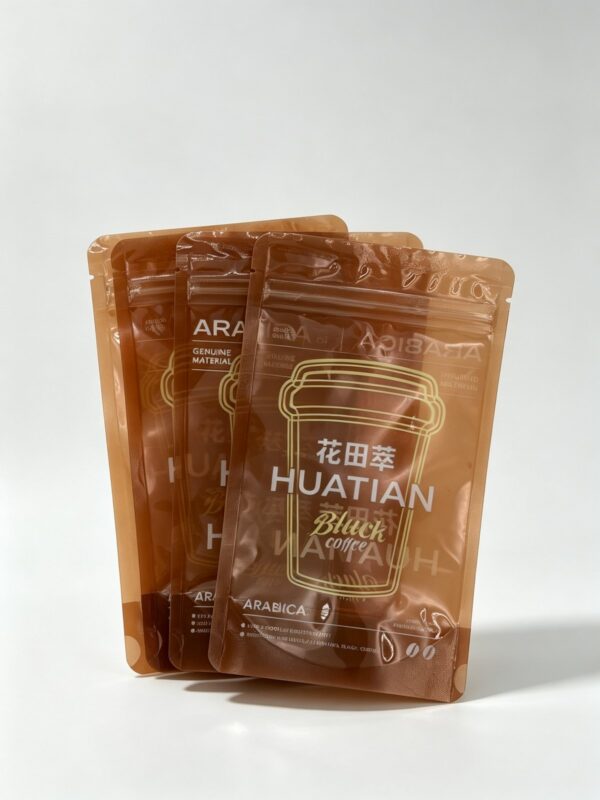
Treats are sold in smaller packs, bought on impulse and often shown through a window. Stand-up zipper pouches are the standard format, with a hang hole where the pack is pegged. Soft, moist treats need a good moisture and oxygen barrier to hold texture. Hard chews, bones and sticks need puncture resistance, so a nylon layer is worth adding.
Freeze-dried and air-dried food
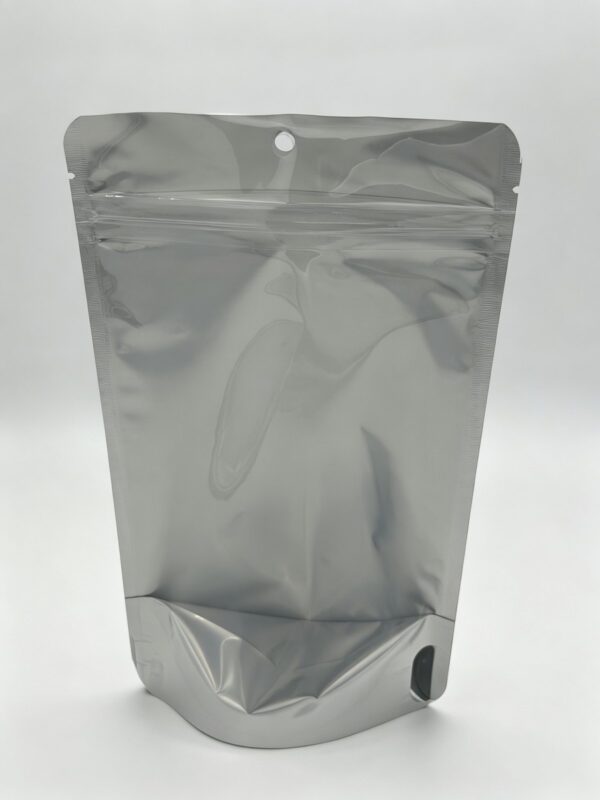
Freeze-dried food is very dry, light, fragile and expensive, and it pulls in moisture quickly once exposed. It belongs in a high-barrier foil structure such as PET/AL/PE with a well-fitted zipper, and windows should be avoided or kept small. A flat-bottom shape gives the fragile pieces some protection against crushing and matches the premium price point.
Wet food
Wet food sterilized in the pack is a different category. It needs a retort pouch built from a structure such as PET/NY/AL/RCPP that withstands the sterilization process.
Formats and structures for pet food packaging bags
| Product | Main risks | Suitable formats | Typical structures |
|---|---|---|---|
| Dry kibble | Grease, rancidity, weight, puncture | Flat-bottom or quad-seal with zipper or slider | PET/AL/PE or PET/VMPET/PE, heavier sealant or nylon for large bags |
| Treats and chews | Oxygen, moisture, puncture from hard pieces | Stand-up zipper pouch, window optional | PET/VMPET/PE; PET/PE with window; add nylon for sharp chews |
| Freeze-dried food | Moisture pickup, oxidation, crushing | Flat-bottom or stand-up with a tight zipper | PET/AL/PE |
| Wet food | Sterilization heat, leaks | Retort pouch, flat or stand-up | PET/NY/AL/RCPP |
| Samples and single treats | Cost per pack | Three-side-seal pouch | PET/VMPET/PE or PET/AL/PE |
Kraft paper laminates are also used for a natural look. Choose a kraft structure with a foil or metallized inner layer for pet food, because paper alone has no grease or oxygen barrier, and keep in mind that paper and foil bonded to plastic are not easily recyclable.
Window vs full foil
A window sells the product. Buyers like to see the shape, color and size of treats, and a visible product builds trust. The cost is protection: the window area is clear film, so it has a lower barrier than the foil or metallized area around it and lets light reach the product. Greasy products can also smear the inside of the window and spoil the look.
Practical middle grounds:
- Keep the window small and place it where product settles, so it does not show empty headspace.
- Use a stand-up window pouch for treats with faster turnover, and full foil for long distribution chains.
- Consider a duplex foil pouch, with one pure-foil face and one clear face, when you want a full view of the product and a foil-printed front.
- For kibble and freeze-dried food, use full foil and show the product with photography instead.
Load capacity, seals and zippers
For heavier bags, strength comes from the sealant thickness, the seal width, the gusset construction and, where needed, a nylon layer. Ask for samples and drop-test them filled with your real product at the real weight before approving production. Large bags can include a die-cut or added handle. For reclosing, press-to-close zippers suit small and medium bags, while sliders and pocket zippers are easier to use on large bags.
Printing considerations
- Photo quality: pet food packs rely on animal and ingredient photography. Rotogravure reproduces photographic images consistently over long runs.
- Range planning: every color needs its own cylinder. If flavors share a background and change only one or two elements, cylinders can be shared across the range, which reduces cylinder cost.
- White ink: on foil and metallized film, white is printed behind the colors where you want them solid rather than metallic.
- Information panels: ingredients, analysis, feeding guides and multi-language text take space. Side gussets are useful here. Keep barcodes on a flat panel, away from folds, and leave a blank area for date and batch coding.
- Finish: matte film with glossy highlights is a common premium look.
Ruixiong Packaging prints in 1 to 10 colors and does printing, laminating and bag-making in-house at its Dongguan factory. Customer cylinders are stored for faster reorders.
FAQ
What is the best material for dry dog or cat food bags?
There is no single answer, but PET/AL/PE is the usual high-barrier choice and PET/VMPET/PE is a lower-cost option for faster-moving products. Large bags need a heavier sealant or a nylon layer for strength.
Can pet food bags have a window?
Yes, and it works well for treats. For fatty kibble and freeze-dried food, a window reduces light and oxygen protection, so most brands choose full foil or a very small window.
Can you provide food-contact test reports?
Yes. Ruixiong can provide third-party test reports such as FDA food-contact reports on request. Tell us your target market so the right documents are prepared.
Send us your product type, fill weight and target market, and we will recommend a format and structure, prepare samples and quote. Contact Ruixiong Packaging to discuss your pet food range.