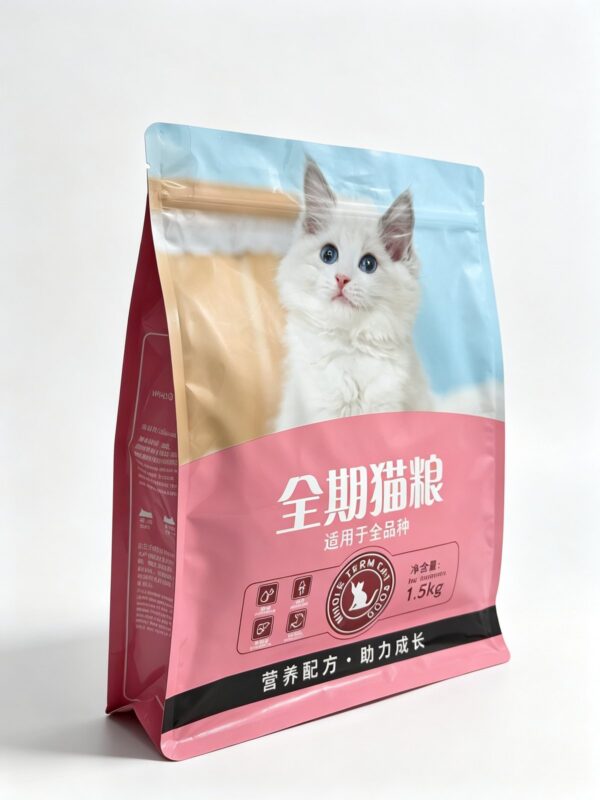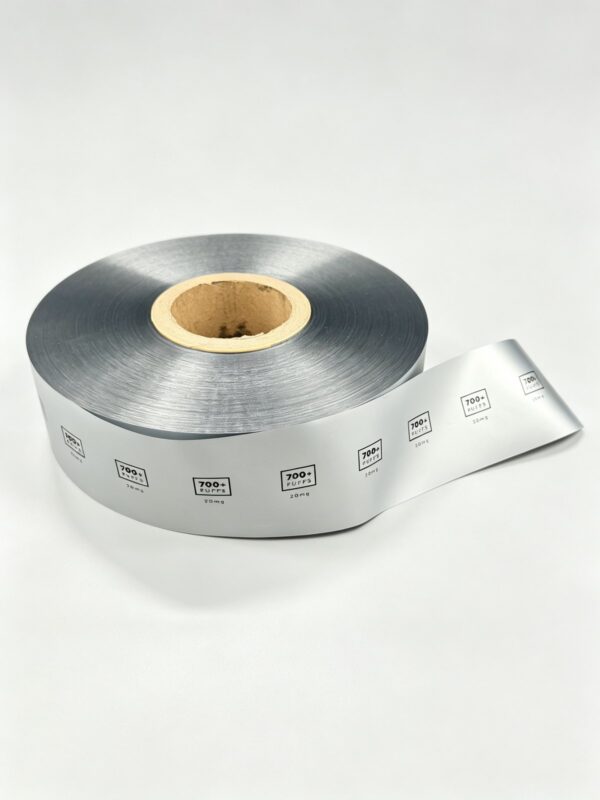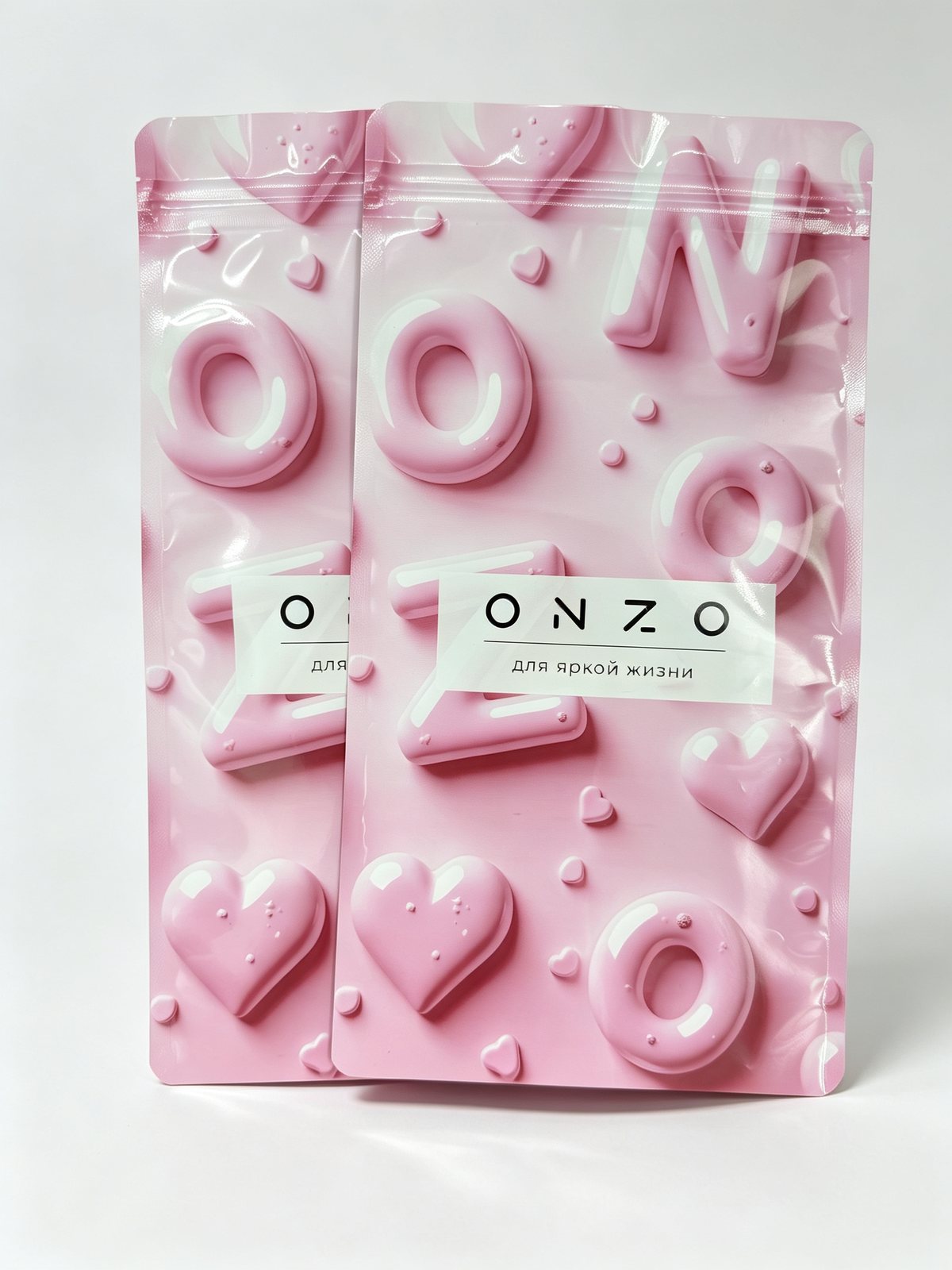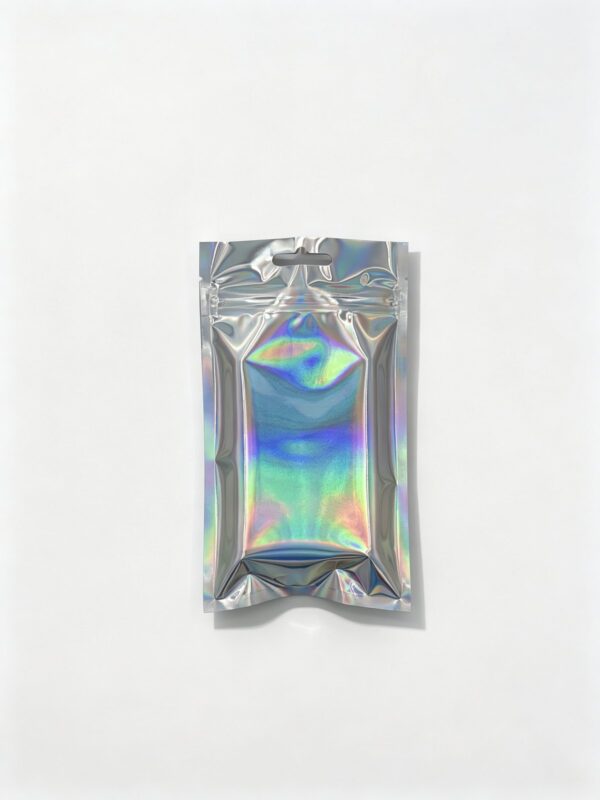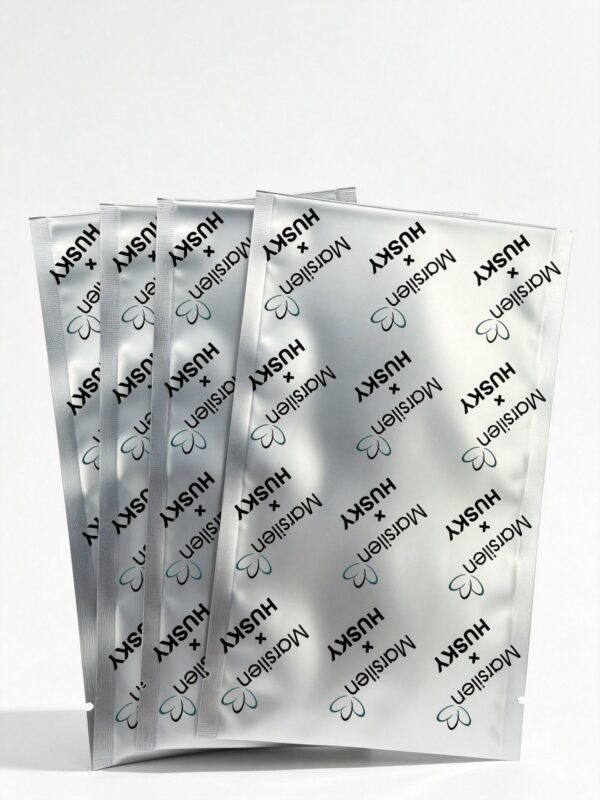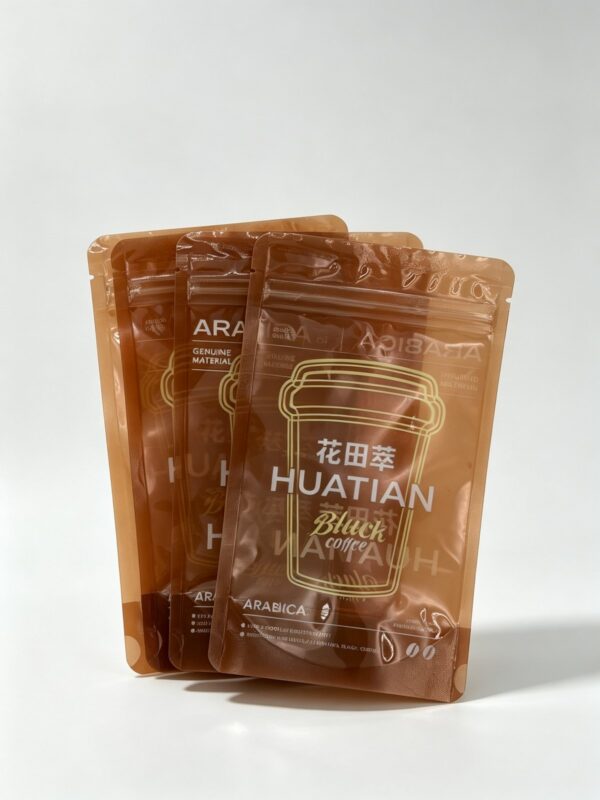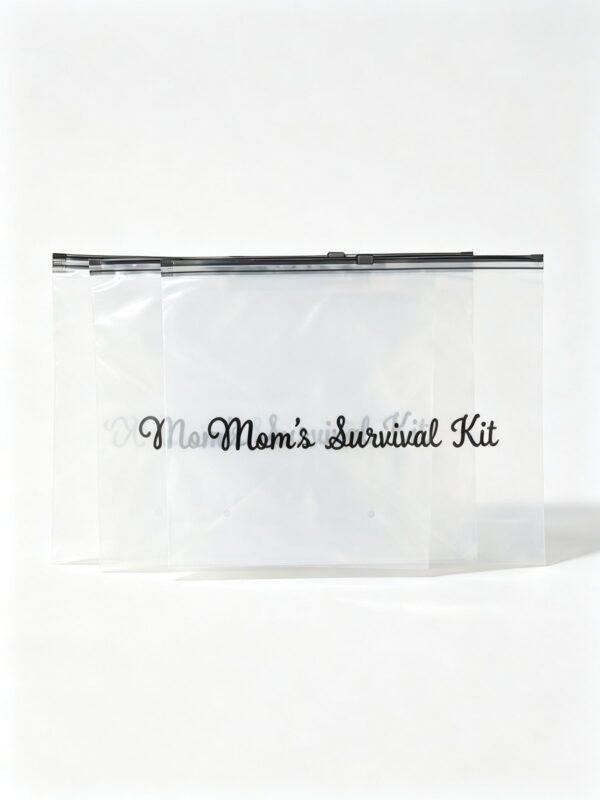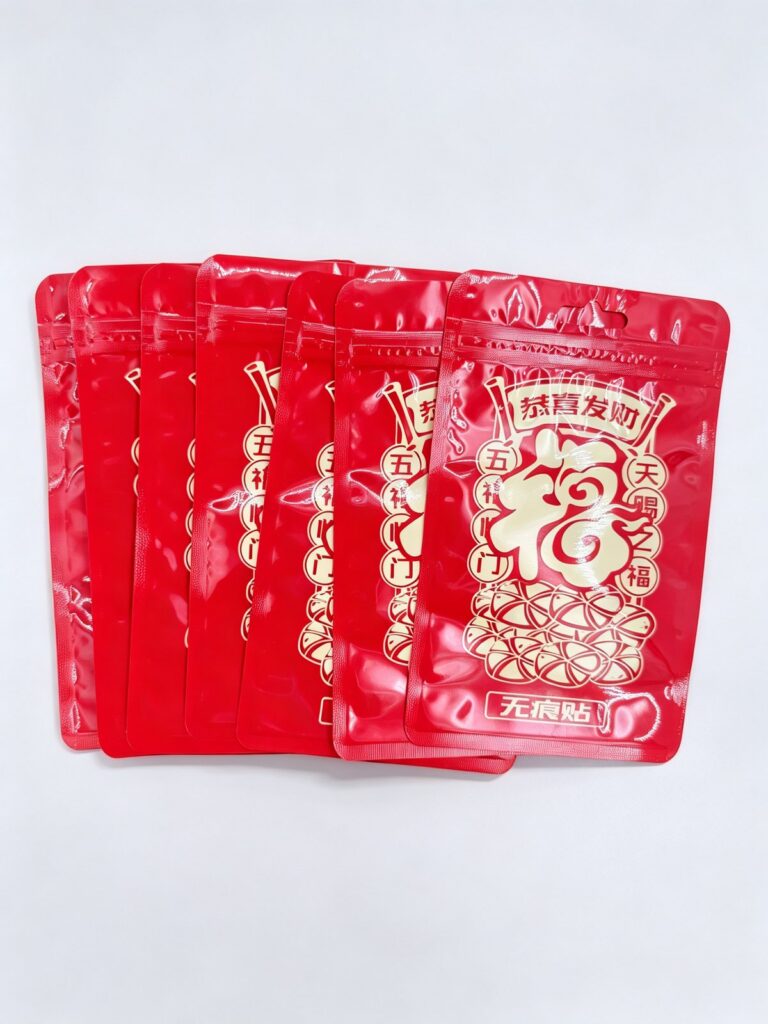
Rotogravure printing for flexible packaging transfers ink from engraved metal cylinders directly onto film, one cylinder per color. It produces sharp, saturated, highly repeatable print at high speed, which is why most medium- and long-run pouches and roll film are printed this way. The trade-off is a one-time cylinder cost at the start of each new design, so the economics improve as quantities and reorders grow.
How rotogravure printing for flexible packaging works
Each cylinder is a steel core plated with copper. The image for one color is engraved into the copper as millions of microscopic cells, and the surface is then chrome plated for wear resistance. Deeper cells hold more ink and print a stronger tone.
On press, the process repeats at every color station:
- The rotating cylinder picks up ink from an ink pan.
- A doctor blade wipes the surface clean, leaving ink only in the cells.
- The film is pressed against the cylinder and the ink transfers to it.
- The web passes through a dryer before it reaches the next color.
Ruixiong Packaging prints from one to ten colors in its own printing, laminating and bag-making factory, so the printed film moves straight to lamination without leaving the building.
One cylinder per color
A photographic design usually needs four process colors (cyan, magenta, yellow, black) plus white. Brand colors are often added as separate spot-color cylinders so they match a Pantone reference exactly instead of being built from CMYK dots. Special finishes such as a registered matte varnish need a cylinder of their own.
Reverse printing inside the laminate
Most laminated pouches are reverse printed. The artwork is printed as a mirror image on the inner side of the clear outer film, typically PET or BOPP, and that film is then laminated to the barrier and sealant layers. The ink ends up sandwiched inside the structure. It cannot scuff in transit, it never touches the product, and the outer film gives the print a natural gloss. White ink is printed last, behind the colors, so they stay opaque over metallized film, foil or a clear window.
Why gravure suits medium and long runs
- Durable image carrier. A chrome-plated cylinder lasts through very long runs with little change in print quality.
- Color consistency. Because ink volume is fixed by the engraved cells, the first meter and the last meter look the same, and so does a reorder printed months later.
- Ink laydown. Gravure lays down heavy, even solids, dense whites and smooth gradients, along with metallic and pearlescent inks.
- Speed. Once the press is set up it runs fast, so the cost per bag falls steadily as quantity rises.
Finishes: gloss, matte and spot effects
Gloss is the default look of a reverse-printed PET or BOPP surface. An overall matte look is usually achieved with a matte outer film. A spot finish combines the two: matte varnish is printed in register on selected areas so that a logo or product image stays glossy against a matte background. Leaving out the white ink over metallized film lets mirror silver show through the design. For stronger effects, the same printing method applies to holographic pouches and pearl-film structures.
What cylinders cost you, and why it is only once
Cylinders are charged as a one-time setup item, separate from the price of the bags. The total depends on:
- The number of colors, since each color is one cylinder.
- The size of the bag, because cylinder circumference and width are made to fit the print repeat. A larger pouch needs larger cylinders.
- The number of designs. Each flavor or SKU with different artwork needs its own set, although versions that share a common background can sometimes share cylinders and change only the one or two that differ.
After the first order, the cylinders are kept for you. Ruixiong stores customer cylinders, so a reorder of unchanged artwork skips engraving and goes straight to press scheduling, with no new cylinder charge. If you later edit text in one color, only that cylinder has to be remade. If you change the bag dimensions, expect a new set.
Finalize dimensions and check every line of copy before engraving: a typo caught on the digital or physical proof is a file edit, while a typo caught after engraving is a new cylinder.
Rotogravure vs digital printing for short runs
| Factor | Rotogravure | Digital printing |
|---|---|---|
| Setup | Engraved cylinders, one per color | No cylinders or plates |
| Best fit | Medium and long runs, repeat orders | Very short runs, market tests, many small SKUs |
| Unit cost | Falls steadily with volume | Stays relatively flat; higher at volume |
| Color | True spot colors, dense white, metallic inks | Process color builds; spot matching and white opacity vary by press |
| Artwork changes | Need a new cylinder for each changed color | Simple file change |
Digital makes sense while you are still testing the market or the artwork changes with every batch. Once a design is stable and volumes are predictable, gravure normally gives the lower total cost and tighter color control.
Artwork preparation tips
- Work on the supplier’s dieline. Ask for the template for your exact format, whether a stand-up zipper pouch, a flat-bottom pouch or printed roll film. It shows seal areas, zipper position, gussets and tear notches.
- Supply vector files. AI or editable PDF, with fonts converted to outlines and linked images embedded at high resolution at final size.
- Give Pantone references for brand colors, and say whether you are matching a coated swatch or a physical sample. Colors look different on clear, white, metallized and kraft substrates.
- Add bleed and keep a safe margin. Extend backgrounds past the cut line as the dieline specifies, and keep text and logos away from seals, zippers and folds.
- Mark the white layer and clear windows as separate named layers so that nothing is left to guesswork.
- Protect barcode contrast. Print barcodes in a dark solid color on a white or light background, never directly over metallized film without white backing, and keep them away from curved gusset areas.
- Limit colors where you can. Every color you remove is one cylinder fewer.
FAQ
How many colors can a gravure press print?
It depends on the press. Ruixiong prints from one to ten colors, which covers process colors, white, several spot colors and a matte varnish.
Do I own the cylinders?
Cylinders are engraved specifically for your artwork. Confirm storage and ownership terms with your supplier in writing; Ruixiong keeps customer cylinders on file for reorders.
Can I change my design after the cylinders are made?
Yes, but each color affected by the change needs a new cylinder. Unchanged colors can be reused as long as the bag size stays the same.
Want to know how many cylinders your design needs? Browse the product catalogue for the format you have in mind, then send us your artwork and bag size for a cylinder count and a quote: contact Ruixiong Packaging.