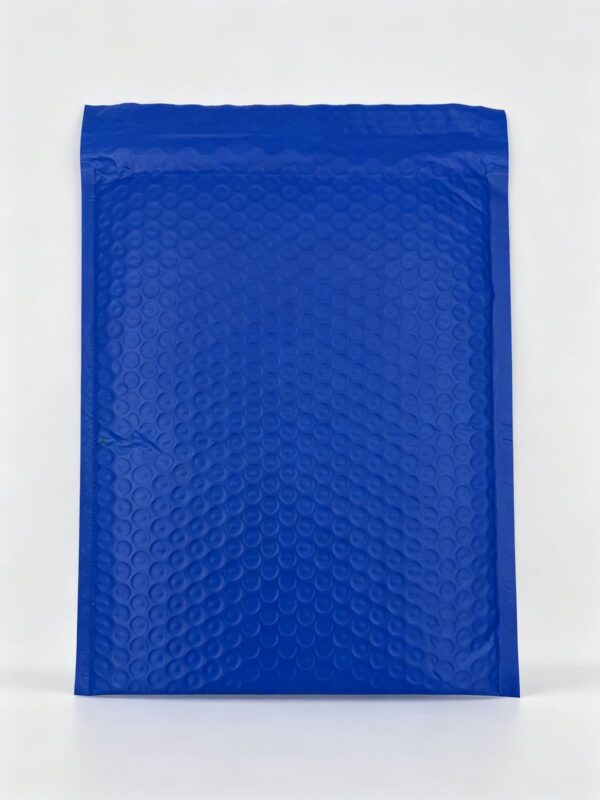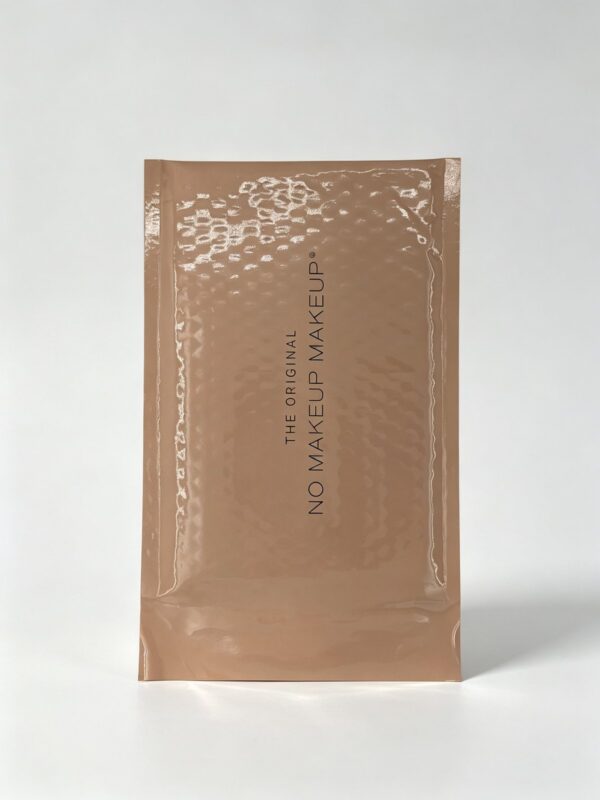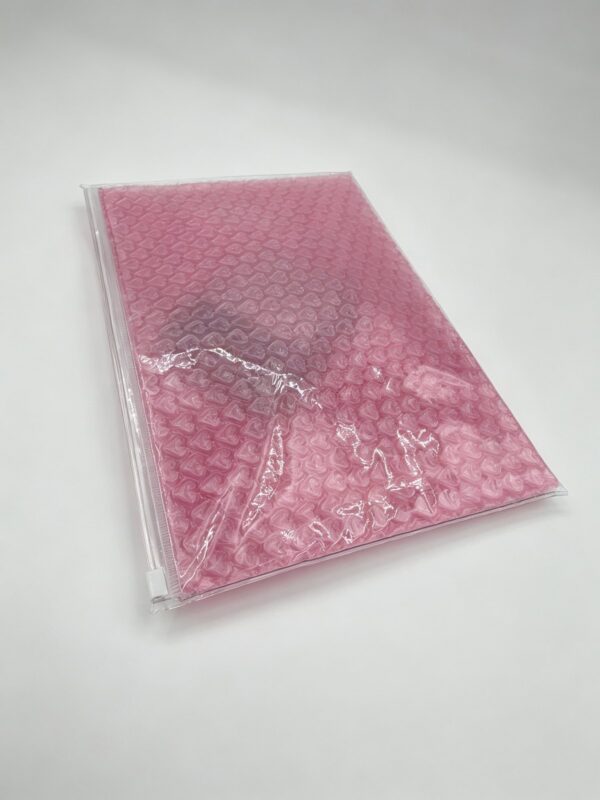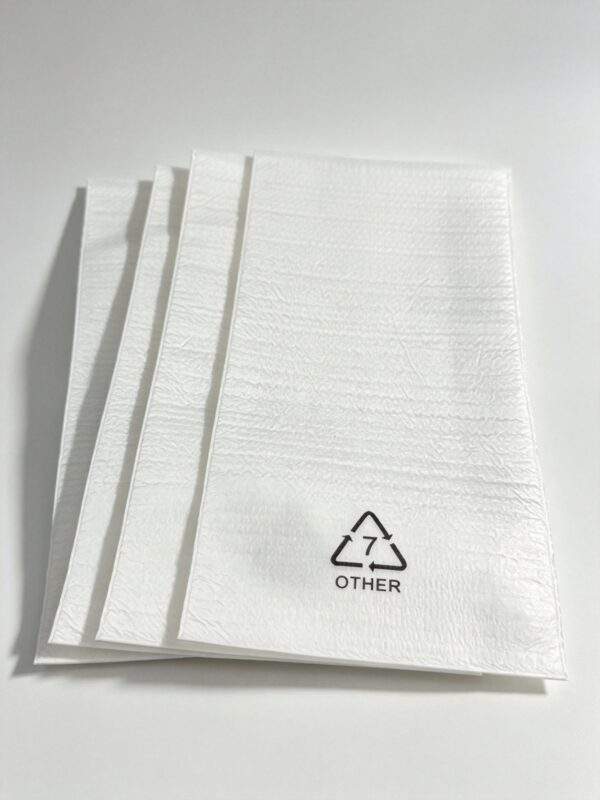
Custom printed bubble mailers are padded poly envelopes with a bubble-film lining and your brand printed on the outer film. Choosing the right one comes down to four decisions: the outer film (matte poly, glossy poly or pearlescent), the bubble size and thickness, the interior dimensions after allowing for item thickness, and how many colors the print needs. Get those right and the mailer protects the product, survives the courier network and still looks like part of your brand when it lands.
What a custom printed bubble mailer is made of
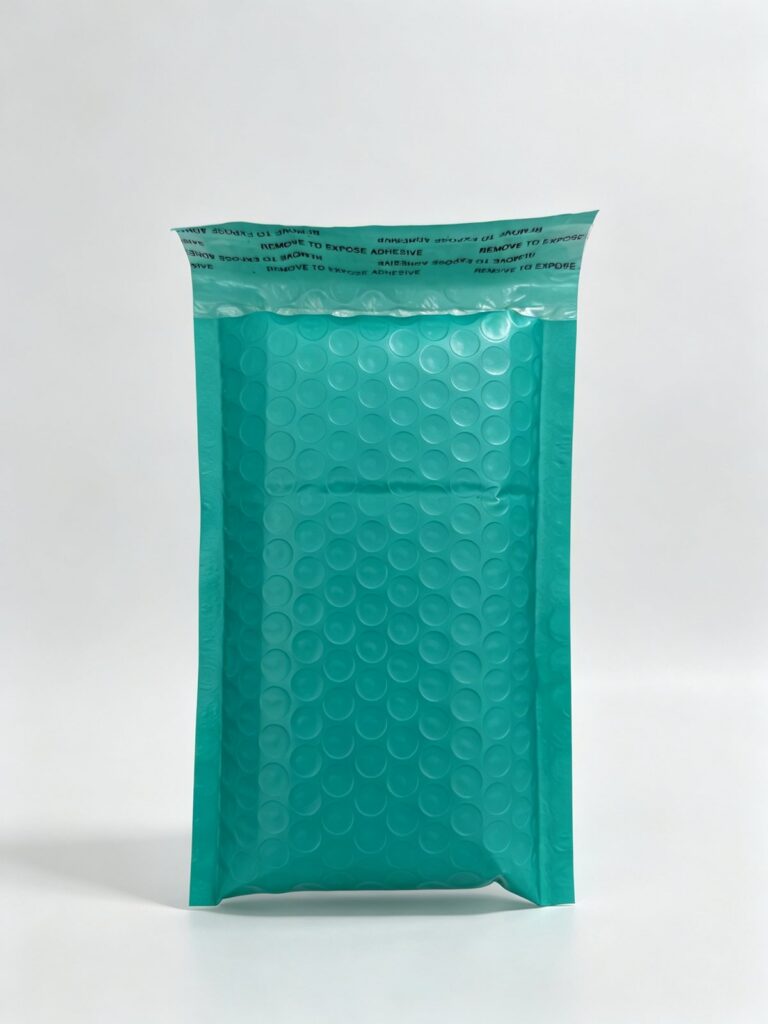
A bubble mailer is a two-layer laminate. The outer layer is a polyethylene-based film that gives the envelope its stiffness, its water resistance and its printable surface. The inner layer is bubble film: a sheet of air-filled bubbles heat-laminated to the outer film. The two layers are then converted into an envelope with a folded bottom, side seals and a flap with a self-seal adhesive strip.
Because the two films are chosen separately, looks and protection can be tuned independently. Ruixiong makes bubble mailers within its protective and express packaging series, with printing, laminating and bag-making all in-house.
Custom printed bubble mailers: matte, glossy or pearlescent film
The outer film decides how the mailer looks and how the print reads.
| Outer film | Appearance | Print behavior | Best for |
|---|---|---|---|
| Matte poly | Soft, low-glare, slightly frosted | Muted colors, good for minimalist logos and text; fingerprints hardly show | Premium apparel, cosmetics, subscription boxes |
| Glossy poly | Bright, reflective, highly saturated | Vivid full-color graphics; scuffs and scratches are more visible | Bold brand colors, consumer electronics accessories |
| Pearlescent film | White pearl sheen with a stiff, crisp hand | Excellent opacity; white base makes colors print clean without a white underlayer | Everyday e-commerce mailers, books, media, small parts |
Pearlescent film is the most common choice because the opaque white base hides the contents and gives a clean canvas for one- or two-color logos. Ruixiong’s pearlescent bubble mailer (Type 1) is built exactly this way: a glossy, stiff pearl layer outside and a cushioning bubble layer inside. The Type 2 and Type 3 variants use the same construction in different formats and sizes.
Bubble size and thickness
The bubble layer is specified by bubble diameter and film gauge. Small bubbles (often around 10 mm) give a flat profile and suit lightweight items such as documents, phone cases, cables and cosmetics. Larger bubbles cushion impact better but add bulk, which matters when couriers charge by volumetric weight. Thicker film holds its air longer and is worth specifying for heavy items or hard edges.
- Light, flat items: small bubble, standard gauge.
- Heavier or fragile items: larger bubble or heavier gauge.
- Sharp or pointed items: use an inner box or foam, with the mailer as the outer layer.
The self-seal strip
Almost all bubble mailers close with a peel-and-seal strip: pressure-sensitive hot-melt adhesive on the flap under a release liner. Confirm with your manufacturer:
- Adhesive width and tack: a wider strip closes more reliably on thicker items.
- Tamper evidence: some strips are designed to tear the film when reopened, which is useful for higher-value goods.
- Liner type: a liner that peels cleanly speeds up packing.
Sizing: interior versus exterior dimensions
This is where most first orders go wrong. Bubble mailer sizes are quoted in two ways, and they are not the same:
- Exterior dimensions are the outside width and length of the finished envelope, including the seals.
- Interior (usable) dimensions are the space actually available for the product, which is smaller because of the side seals, the bottom fold and the bubbles themselves.
Brief the manufacturer with the item size, not a mailer size seen elsewhere. Add clearance to width and length, and add roughly the item’s thickness again to the width so the mailer wraps around it without stretching the seals. A flat product 200 mm wide and 20 mm thick therefore needs noticeably more than 200 mm of usable width. A physical sample lets the factory confirm the fit before production.
Printing on bubble mailers
Ruixiong prints the outer film by rotogravure before lamination and bag-making.
Number of colors
One- and two-color prints are the most economical and easiest to keep consistent on reorders. Three- and four-color designs allow illustrations and gradients. Engraved cylinders are stored after the first run, so repeat orders need no new tooling.
Where the logo goes
Front-face printing is standard; the flap is usually kept clear for the seal strip and courier label. Many brands add a repeated pattern on the back and an “open here” mark by the flap. Keep critical elements a few millimetres away from side seals and the bottom fold, where the film is stretched.
Dark and colored films
A black or deep-colored film looks striking, but light inks on dark film need a white underprint or metallic-look ink to stay legible. Pearlescent white film avoids this problem, one reason it remains the default for e-commerce.
When a bubble mailer is not the answer
Two other formats cover cases where an envelope does not fit:
- PVC bubble zipper bags use a clear, glossy PVC outer film over the bubble lining and close with a zipper. They suit retail packaging for cables and small electronics where the customer should see the product and reopen the bag.
- EPE foam pouches replace bubbles with expanded polyethylene foam, which cushions more evenly, does not pop and is available anti-static for electronic components.
How to brief a manufacturer
A clear brief shortens the quote-and-sample cycle:
- What you ship: item dimensions, weight, and whether it has hard corners.
- Required interior size, or item dimensions plus the clearance you want.
- Outer film: matte poly, glossy poly or pearlescent, and the color.
- Bubble size and any gauge preference.
- Artwork as vector files with Pantone references, the number of colors and where each element sits.
- Closure: self-seal strip, and whether tamper evidence matters.
- Estimated annual volume and first-order quantity.
Ruixiong follows a consultation, quote, sampling, cylinder making and production, three-stage inspection and delivery sequence, and supports export customs documents.
FAQ
Are custom printed bubble mailers waterproof?
The poly outer film is water-resistant and keeps out rain and splashes in transit. The self-seal strip is not hermetic, so the mailer is not watertight for liquids or long outdoor exposure.
Can I print in full color on a bubble mailer?
Yes. Rotogravure handles multi-color artwork, and photographic designs print well on a white pearlescent or glossy base. One- or two-color logos remain the most cost-effective.
What is the difference between a bubble mailer and a poly mailer?
A poly mailer is a single-layer film envelope with no cushioning, suited to soft goods such as apparel. A bubble mailer adds the bubble lining for items that can be scratched or cracked.
How do I know which size to order?
Send the item dimensions, including thickness, and ask for the usable interior size rather than the exterior size. A sample confirms the fit before the full run.
Planning a run of custom printed bubble mailers? Share your item sizes and artwork through the contact page and Ruixiong will propose a film, bubble spec and print plan to sample.