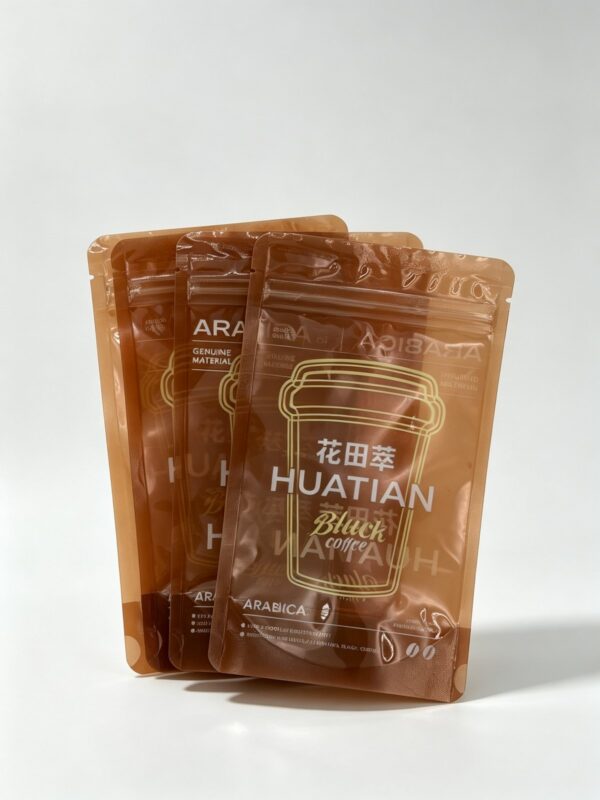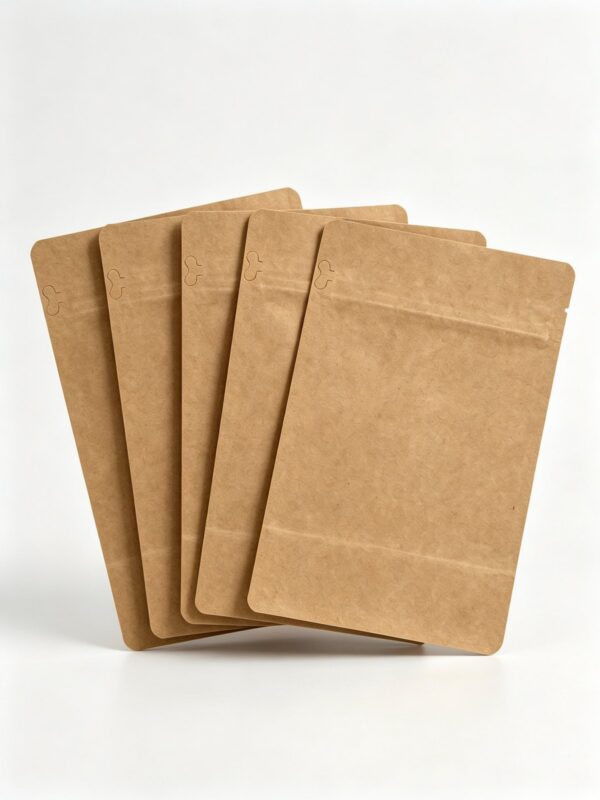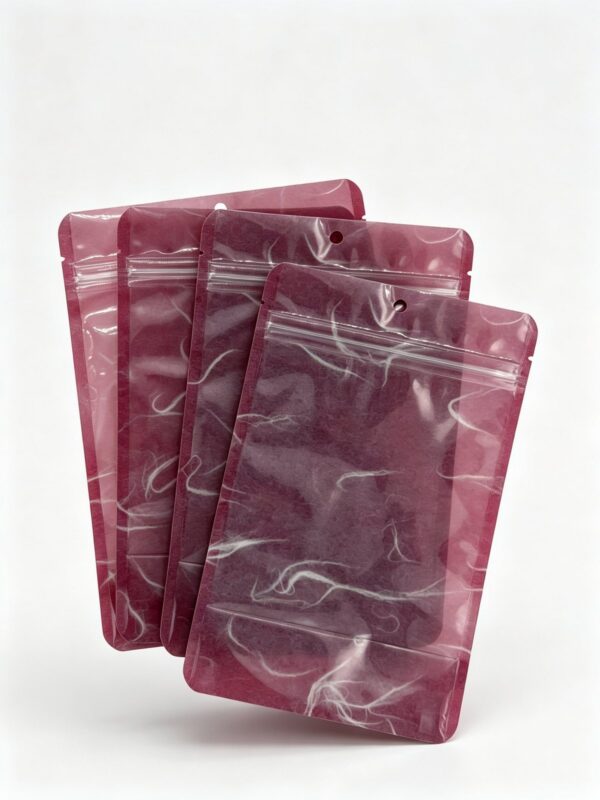
Flat bottom pouch vs stand up pouch comes down to shape and budget. A stand-up pouch has two face panels and a bottom gusset; it costs less and suits small to medium fills. A flat-bottom pouch adds two side gussets and a true flat base, so it stands like a box, holds more and gives you five printable panels, at a higher unit cost. The sections below explain where each one wins.
Flat bottom pouch vs stand up pouch: the structural difference
Stand-up pouch
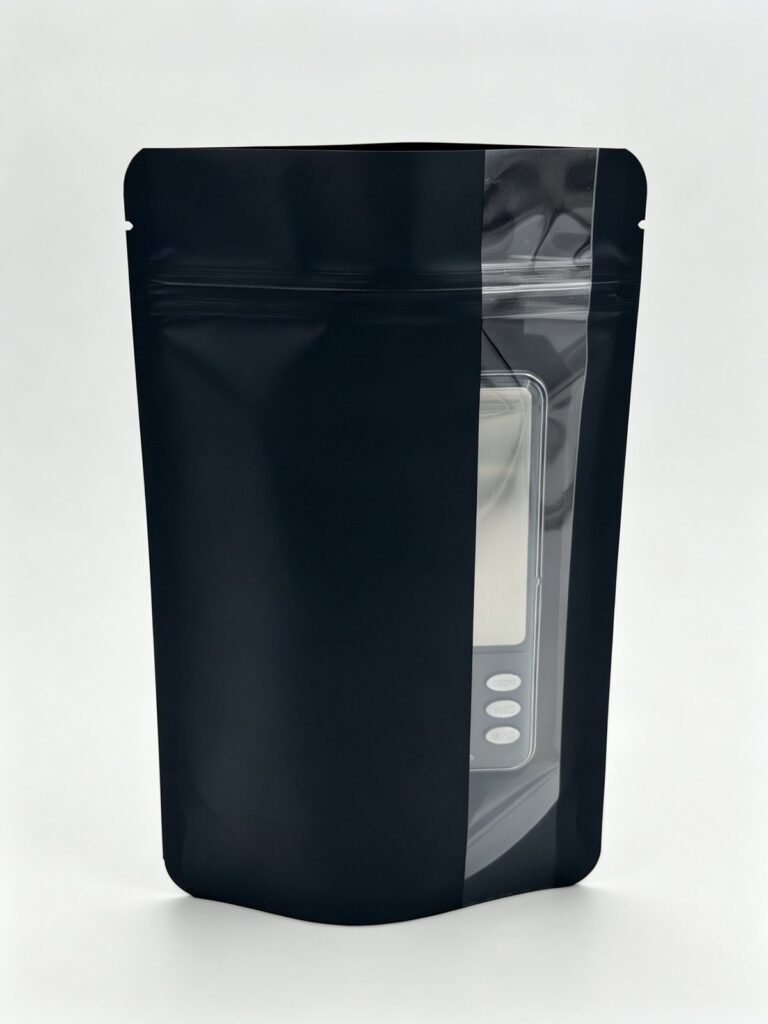
A stand-up zipper pouch is made from a front panel, a back panel and a folded bottom gusset sealed between them. When product goes in, the gusset opens and forms an oval base. The body tapers from a rounded bottom to a flat top, so a filled stand-up pouch looks a little like a teardrop from the side.
Flat-bottom pouch
A flat-bottom pouch has five panels: front, back, two side gussets and a separate rectangular bottom. Four vertical corner seals plus four seals around the base give the format its other names, eight-side-seal bag, box pouch or block-bottom bag. Filled, it is a rectangular block with crisp edges from top to bottom.
Shelf presence and branding space
Both formats stand on the shelf and face the shopper, but they do it differently.
- Printable area: a stand-up pouch has two main panels, plus a bottom gusset that few shoppers see. A flat-bottom pouch has five. The side gussets are useful space for ingredients, brewing or feeding instructions, a brand story or a second language, which keeps the front panel clean.
- Posture: a flat-bottom pouch stays upright and square even when it is half empty. A stand-up pouch is stable when full but tends to lean or slump as the contents go down, especially in larger sizes.
- Shelf line-up: box-shaped bags sit tightly side by side and form a neat block of color. Stand-up pouches have curved sides, so the facing looks softer.
- Perceived value: the box shape and stiff edges read as premium, which suits specialty coffee and higher-priced pet food.
Capacity and shipping
For the same width and height, a flat-bottom pouch holds noticeably more, because the side gussets add depth along the full height of the bag rather than only at the base. Put the other way round, the same fill weight fits into a shorter or narrower flat-bottom bag, which can mean more facings on a shelf.
Stand-up pouches are very efficient in small sizes, where the difference in capacity is minor and the lower bag price matters more. As the fill weight goes up, the stand-up shape becomes harder to keep stable, and flat-bottom or quad-seal formats take over. Both formats are delivered flat, so freight and storage are similar.
Cost drivers
A flat-bottom pouch normally costs more than a stand-up pouch of the same capacity and laminate. The gap depends on size and quantity, but the reasons are consistent:
- More film: five panels and eight seals use more laminate per bag.
- More complex bag-making: the side gussets and bottom are usually fed as separate webs and joined to the body, which means slower machine speeds and more setup than a stand-up pouch.
- Printing layout: if the side gussets carry their own printed design, the job can need additional gravure cylinders. Plain or single-color gussets keep this down.
- Zipper type: flat-bottom bags often use a pocket zipper or pull-tab zipper, which costs more than a standard press-to-close zipper.
Because Ruixiong Packaging runs printing, laminating and bag-making in-house, both formats can be quoted side by side from the same artwork brief, so you can see the real difference for your size and quantity. The production steps are shown on our factory page.
Filling and sealing
Both are premade pouches, filled through the open top and then heat sealed, by hand or on a premade-pouch machine.
- A flat-bottom pouch opens into a box with a wide mouth, which makes scoop or auger filling of beans, kibble and granola easy.
- A stand-up pouch has a narrower opening and needs the gusset to be pushed open by the product or an air blast. It handles powders, snacks and liquids well, and it is the base for spout pouches.
- If you use an automatic machine, check that its grippers and opening station accept side-gusseted bags before switching formats.
Side-by-side comparison
| Aspect | Stand-up pouch | Flat-bottom pouch |
|---|---|---|
| Structure | Front, back, bottom gusset | Front, back, two side gussets, flat base |
| Printable panels | Two main panels | Five panels |
| Stability | Good when full; can slump as it empties | Very stable, box-like at any fill level |
| Capacity for the same width and height | Lower | Higher |
| Unit cost | Lower | Higher |
| Filling | Narrower opening; suits powders, snacks, liquids | Wide box opening; suits beans, kibble, granola |
| Typical products | Snacks, nuts, dried fruit, tea, powders, treats, sample sizes | Coffee, pet food, rice, cereals, premium dry foods |
When each format wins
Choose a stand-up pouch when
- the fill is small to medium and unit cost is the main pressure;
- you sell many flavors or SKUs and need to keep packaging spend per SKU low;
- the product is a liquid or paste that needs a spout;
- the pack hangs on a peg as well as standing on a shelf.
Choose a flat-bottom pouch when
- the product is sold at a premium and the pack has to show it;
- the fill is heavier or bulkier and the bag must stay upright until it is empty;
- you need side panels for regulatory text, instructions or several languages;
- shelf space is tight and you want more product per facing.
Materials are not a deciding factor, because both formats use the same laminates: PET/PE for basic protection, PET/VMPET/PE for a metallized mid barrier, PET/AL/PE for high barrier, and kraft laminates for a natural look. For example, our flat-bottom zipper food pouch uses PET/AL/PE for pet food, while kraft flat-bottom pouches and kraft stand-up zipper pouches give the same paper look in either shape.
FAQ
Is a flat-bottom pouch the same as a box pouch or eight-side-seal bag?
Yes. Flat-bottom pouch, box pouch, block-bottom bag and eight-side-seal bag all describe the same structure: two side gussets and a flat rectangular base.
Can both formats have a zipper, valve or window?
Yes. Zippers, tear notches, one-way degassing valves and clear windows can be added to either format. Flat-bottom bags also accept pocket zippers and tin-ties.
Which is better for coffee?
Both work. Flat-bottom bags are popular for retail bags of whole beans because they stand square and look premium. Stand-up pouches are common for smaller packs, samples and brands that watch unit cost closely.
Can I switch formats and keep my existing cylinders?
Usually not. The panel sizes and layout differ, so the artwork has to be adapted to a new dieline and new cylinders engraved. Ruixiong stores customer cylinders, so once a format is settled, reorders are faster.
If you are still undecided, send us your product, fill weight and target look, and we can sample both formats for you to fill and compare. Contact Ruixiong Packaging for a proposal and quote.